“What he wished to believe, that is what each man believes” — Demosthenes
On multiple occasions in the past, and always in response to some person stating that he (or she, usually a he) has no religion, no god, and is, therefore, fully and sovereignly in control of his life, I have said that everyone has a god, a religion, whether they acknowledge it or not. What is the one thing, the value, the idea which you hold in highest regard, which is most important to you, and which reigns supreme over everything else in your life? Regardless of its nature or being, that is your god and the pursuit of it is your religion. You place your faith and your belief in it and you worship it. No one is exempt. No one can rise above this fact nor escape its certainty.
I have been vindicated. In his book, We Who Wrestle with God, Jordan Peterson, yes, that Jordan Peterson, writes this, barely a few pages into the foreword.
“We elevate what we most highly regard to the utmost place of supremacy or sovereignty. We aim at the upward target we deem central, however momentarily. We bring our consciousness itself to bear on what we define as worthy of the expenditure of our attention and the efforts of our action. We begin our continual journey forward by positing a good–a good that is at least better than our point of departure. This is an act of faith as well as one of sacrifice: faith, because the good could be elsewhere; sacrifice, because in the pursuit of any particular good we determine to forgo all others.”1
Nature abhors a vacuum, it is said, and those who state that there is no god and that religion is for fools literally create their own spiritual vacuum which must be filled with something. That something is usually themselves. “God does not exist, therefore, in the absence of God, I become God.” This is commonly known as atheistic humanism and its most basic tenet is that Man can determine truth for himself without any “help” from outside. The major problem with this line of thinking is that it is impossible to prove that God does or does not exist. Instead, the concept must be taken on faith, which is an aspect of a religious belief.
Some “believers” in the non-existence of God become nihilists, believers in nothing, who work toward the destruction of anything good and positive so that something else can be built in its place, subsequently to be destroyed. (See here for a good description of nihilism.)
“Let us put our trust in the eternal spirit which destroys and annihilates only because it is the unsearchable and eternally creative source of all life–the passion for destruction is also a creative passion!” — Mikhael Bakunin
This is perpetual, unending destruction for the sake of destruction, until Utopia is reached. Somehow, Utopia will be attained. The devil is in the details.
“Deeper down, at the core of our dilemma, is a self-perpetuating crisis of thought. In a sense the difficulty is a very simple one, adequately captured in the story of Adam and Eve. Mankind, tired of dependency on its creator, seeks to strike out alone.” — John Waters
Yes, mankind seeks to strike out alone, to chart his own course, to become his own arbiter of truth. This is exactly what happened in the Garden of Eden, metaphorically or literally, and mankind is still suffering from the action taken. Mankind also suffers from the actions taken today because we have never recovered from The Lie that we could be like God, equal with Him in the determination of what constitutes and defines good and evil. We see it everywhere throughout society. It is in the forefront of the news constantly, as evidenced currently by Israel’s ongoing slaughter of her weaker neighbors, countenanced by the assertion that this is, somehow, God’s desire and, therefore, to be supported without reservation.
“The strong do what they can and the weak suffer what they must.” — from the Melian Dialogue
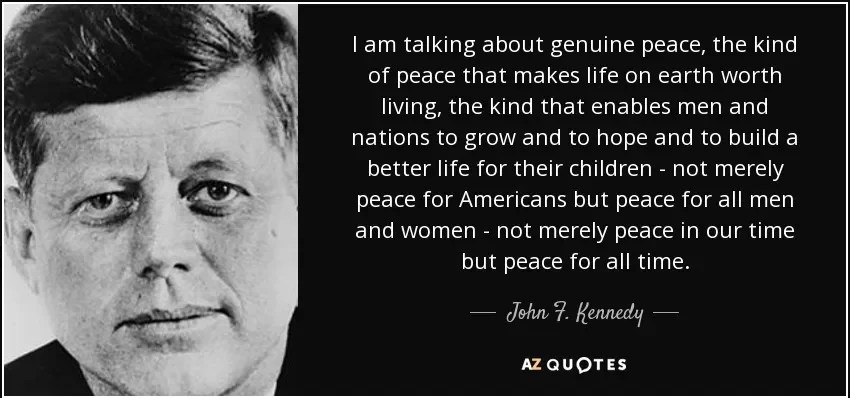
Yet, in spite of this, in the midst of all the chaos, din, and confusion, there is that still small voice which whispers quietly to us, which we cannot drown out or silence, no matter how hard we try: “Love your neighbor as you love yourself.”
What is God? Who is God? Who shall declare himself as God? There is only one answer and it is seen in the immediate quote above. Even this, though, is subject to interpretation because if Man is God, then however Man loves his neighbor is right and proper, as in, “Do to your neighbor, but do it to him first”, which is pure aggression, or “Love your neighbor, but more especially his wife”, because in all probability, your neighbor is “loving” your wife, even as we speak.
This whole conversation thus reverts back to the beginning: what is truth, and who will define it. Shall I submit to a higher authority and align my life with its (His) decrees or shall I make the vain attempt to go my own way and declare myself God, regardless of the cost?
Does it really matter who or what we worship as God? Does it really matter whose word becomes law? The difference is stark. “Love your neighbor as you love yourself.”, and its total opposite, “I am the president. I can do whatever I want.”
Well, yes, Mr. Trump, you can, but there are always consequences which follow.
We Who Wrestle With God, Dr. Jordan B. Peterson, Penguin Random House, 2024, page xxvii. ↩︎
“I have written a number of articles for which I have received little response about the horrible mistake humanity has made by entering into the digital revolution and the AI it spawned. These disastrous developments are now being institutionalized in all societies. They bring the end of human autonomy, independence, control, objective truth, freedom, and awareness of reality.” — https://www.lewrockwell.com/2025/11/paul-craig-roberts/the-destruction-of-reality/
I have great respect for the insights promoted by Paul Craig Roberts, but no sympathy for the fact that he has received “little response” to his offerings. The fact of the matter is that, virtually wherever I have seen his postings, there has been absolutely no possibility to respond–no email address, no comments allowed, etc. It’s almost as if he is talking to the wall and then gets miffed when the wall just sits there. My advice to him: open up the channels of communication and you will be surprised at the response you get.
I respect Caitlin Johnstone for her tenacity. She sees things which are wrong and goes after them full-force, most especially the morally disastrous catastrophe happening in Gaza. Yet, I simply cannot align myself with her viewpoint on capitalism, which she routinely and often maligns without ever getting to the root of the problem. It is easy to blame “capitalism”, however, in our own way, every single one of us is a capitalist.
Capitalism, at its root, is the everyday acting out of every single individual using what he has at his disposal to make his own life better, whether financially, socially, emotionally, or spiritually. What Johnstone decries, yet does not distinguish, is that when power (force, violence) is brought to bear on society, there is no longer free capitalism, freedom of choice, but a contrived system in which individuals are no longer able to decide for themselves, but must submit to the will of others.
What is capitalism, indeed, if not the ability of one person deciding where and how to “invest” his own capital, regardless as to the amount, so that he reaps a reward at some indeterminate time in the future? Did not Jesus extol this practice, as seen in The Parable of the Talents, i.e, putting the money which has been entrusted to you to profitable use? (Matthew 25:14-30)
————————————————————
“We tell ourselves that violence is like a coat that you can put on and take off when you choose, but that’s a tragically mistaken way of thinking. Violence works its way into your body, even into your soul. Then it festers there, eating away at your capacity for being human — your longing for loving, honest relationships; your care for yourself and others; and your deep connection to other living beings. Even worse, in a culture that glorifies violence and has made it into something sacred, such dynamics are excruciatingly hard for us to see clearly.” — https://www.lewrockwell.com/2025/11/no_author/military-moral-injury-violence-and-the-parable-of-the-guinea-worm/
An honest, soul-searching inquest into the repercussions of organized violence and our acceptance of it. 11/11 used to be known as Armistice Day, the celebration of the end of war, but it has transmogrified into the celebration of the worship of violence and those who practice it, without ever recognizing the consequences which follow such action, i.e., the destruction of our own souls.
We live, it is widely and loudly asserted, in a deeply divided nation in which the two main polar extremes, Left and Right, cannot get along and will never be able to agree on anything at all, not to mention all the innumerable smaller factions and splinter groups who simply are at irreconcilable odds with no chance of ever achieving even a smidgeon of tolerance for each other, let alone actually working together for a better world.
“I am not going to waste your time debunking these assertions. They have been repeatedly, exhaustively debunked. You know what they are and you either believe them or you don’t. Either way, reviewing and debunking them again isn’t going to change a thing.” — C.J. Hopkins, Fear and Loathing in the New Normal Reich, Skyhorse Publishing 2025, pg. 77.
Well, admittedly, I have jerked C.J.’s statement completely out of context and applied it to another issue entirely, but the fact remains that there are an incredible amount of people in America today who are constantly making assertions about the divisions and disconnectedness among the populace. (My apologies to you, C.J. for the slight.)
OK, enough digression. Back to business. We have work to do.
One of the most common of the assertions is that “they” are constantly keeping us stirred up and fomenting trouble between “us”, with the expectation that “we” will focus on fighting with each other instead of “them”. You know what I mean, the Superior Elites against the Countless Masses.
“The goal is clearly to keep us divided so the plutocrats can keep doing what they are doing.” — from an undisclosed source, but the sentiment is widespread
Well, if this is the goal, then it seems logical that we figure out what we have to do to defeat it. Wouldn’t you think that, if “they” want to keep us divided and “we” are trying to resist them so that “they” don’t win the game, then “we” should stop doing whatever it is that divides “us”? Now, that wasn’t so hard, was it? Just stop being divided and “their” power over us is immediately shredded like so much confetti, but, as with any conundrum, the knowing comes easier than the doing. It is quite elementary to say that we really ought to get along with each other in a spirit of cooperation, but actually bringing ourselves to act on it is a horse of a different color.
But, that raises a question. Why is it so difficult to get along with others? I will leave it there for you to ponder. If you come up with an answer and want to share it, feel free to write a comment. OK, OK, here’s a hint.
Step 1: Examine yourself and admit that you might have something to do with the problem. Identify those areas within your own life which make it hard for other people to get along with you. (Notice that the thrust of the argument has been flipped. It’s not that you find it hard to get along with others, but that they find it hard to get along with you. If this rings true, then Step 2 should be easy for you to figure out.)
Step 2:
Step 3:
Step 4:
Step 5:
By the time you work your way through all of these steps, each one leading naturally to the next, the problem should have been resolved. BTW, if you need some help with this exercise, I recommend you go to https://bionicmosquito.substack.com/p/the-teaching-that-is-foolishness and work your way through this simple, yet comprehensive study on the Beatitudes.
“If it is possible, as much as depends on you, live peaceably with all men.” — Romans 12:18
In today’s modern world, I am an oddity. I say this because I gain most, nearly all, of my information from reading. I rarely watch videos. This is a deliberate choice. I have found over the years that I can get more out of an article, essay, pamphlet or book in less time than it would take to equal that by watching a video. Most videos, in my opinion, are at least 50% longer than they need to be due to the inevitable advertising, hemming, hawing, and general waste of time over virtually nothing at all. Training and teaching videos which get right to the point and stay on track may be different, but a very large part of what is produced and disseminated today is “stuff” for which I have no time.
Many people today probably don’t understand that and, as time goes on, less and less time is spent on readership and critical thinking about the language and wording of the text, which is rationally and logically based. Videos provide an artificial boost emotionally because the viewer can literally see and hear the facial expressions and hear the tonal inflections of the speakers, which written words are not able to do without an active imagination. Images provided add to the “heat of the moment”, in whatever the video is attempting to convey. The immediate effect of this is that attention spans are shrinking. It is becoming harder and harder for people to focus on any one thing or topic, such as a book or full length article, for extended or long periods of time.
I recently found an article on Forum Geopolitica which confirmed this phenomenon. The article itself is long, long, long, but grabbed my attention from the beginning and I read it through to the end. It might have taken me half an hour, but, as far as I am concerned, was well worth the time and I have a much better understanding of the topic than I would have if I had not read it. The quotes below are taken from it.
“[W]e are experiencing a process of de-literacy, a relapse into a new illiteracy. The ability to understand complex texts is being lost on the way to an “age of idiocy”.[93] The loss of written culture in turn leads to a crisis of tradition: this opens the door to the recoding of history, a reframing in the service of ruling propaganda, and the implementation of historical lies…”
“…When writing loses its significance as a tool of communication, historical experiences are lost – which condemns us to repeat them. If the word tends to become obsolete, the analytical power of written symbols is also lost. Visual media become the dominant matrix of truth, as they are much more effective at undermining reason and appealing directly to emotions.[95]…”
Visual media become the dominant matrix of truth… Isn’t that exactly what has happened across much of the world today? It’s not too far-fetched to think that, books might themselves become oddities, accessible only in museums as quaint artifacts of ancient history. The goon squads of Fahrenheit 451 might become obsolete because no one ever reads anything, thus depriving writers of a viable market.
Book? What’s a book?
My father, whom I learned to understand too late, said that there was only one thing which needed to be taught to anyone, namely, how to read AND understand what had been read. If a person can read anything and understand it, there are no limits to what he might achieve. Everything can be learned–everything–including complex and advanced subjects, IF understanding comes with the reading. Abstract philosophical and religious concepts, theories, sciences, mathematics, all the way to mundane, everyday subjects–all these can be learned simply by knowing how to read and to understand what has been read.
When I was young, I read anything I could get my hands on, mostly fiction, but I also spent a lot of time studying encyclopedias, fascinated by geographic maps and history. Gradually, my tastes changed and now I hardly ever read a novel, concentrating on non-fiction works of all stripes and persuasions, constantly honing my beliefs and (hopefully) becoming a better thinker for my efforts.
While reading the above-cited article, it struck me that modern society might be reverting back to a time where only a few, the learned few, could address issues intelligently and the masses of men simply lived as they had for centuries with no hope of ever escaping the pit of extreme ignorance. The vision that came to me was of monks in a monastery, toiling a lifetime away to produce knowledge, while nearly everyone around them was in survival mode, simply trying to stay alive. Of course, the argument can be made that education was strictly limited to the intelligentsia and that the common people and even their nobles had no means of accessing that until Gutenberg’s press came along, which may be true, but it still does not detract from my point. The fact is that knowledge and information are easier to gain today than ever before in history, yet the ability to retain those for longer than the immediate usage is rapidly being degraded. If the medieval, Dark Ages were a pit of ignorance, then what would today’s society be called? Age of idiocy seems to be about right.
In a world where video and audio are increasingly dominant, it becomes more difficult to determine what is actually true, especially now that AI can be used to manipulate photos and sounds, even words, to achieve the ends desired. How do I know that video I just watched is completely accurate? Has it been worked over to portray something different than what is seen and heard? I have no way of being sure without relying on someone else’s judgment and say-so. It is nearly impossible to do this with the written and published word which cannot be changed without leaving a record.
All that aside, curling up with a good book, whether on a couch beside a roaring fireplace or not, is far more satisfying than watching it (or its adaptation and interpretation) on a screen. The “seeing” of Buck in Call of the Wild, Sherlock Holmes, Beau Geste, the Chronicles of Narnia, Aku-Aku, or the Gulag Archipelago, in one’s own mind far surpasses the experience of seeing them according to someone else’s imagination.
But, then, I may just be speaking as an old fogie who refuses to keep up with the times and wants to revert back to his own Age of Innocence.
I subscribe to Doug Casey’s communique and regularly receive articles which I always read intently, sometimes more than once, and from which I usually learn something, even if nothing more than to buttress and bolster my own viewpoint. The most recent one did just that, commenting on the system in American society which we call “justice”, and proposing a logical, well-reasoned solution to the problem. I have reprinted it here in verbatim and added nothing. If you want to see the original, click on the link below. For the record, I am in complete agreement with Casey’s argument.
International Man: What is the role of a justice system in a society, and what should the State have to do with it?
Doug Casey: In my view, what really holds a society together isn’t the laws enacted by legislatures or dictators, but peer pressure, social opprobrium, and moral approbation. In general, society is pretty self-regulating. It’s why people pay their bills at restaurants even though there’s not a cop at the door. Criminals are the exception, not the rule—although, it must be said, they naturally gravitate towards the government.
When somebody commits a crime, there’s a trial to determine what harm has been done, who should be compensated, and so forth. Courts determine these things. But I would argue that the state is not a necessary part of any of this. Society, like markets, tends to be self-ordering.
With a minimal “night watchman” sort of state like that described by Ayn Rand, the proper role of government is simply to defend you from force and fraud. This implies an army to defend you from force external to your society, a police force to defend you from force within your society, and a court system to allow the adjudication of disputes without resorting to force.
I could live in a society like that—it would be a vast improvement over what we have now. A proper court system, with either arbitrators or judges and juries system, would be part of it. But I’d go on to argue that juries and courts should be privatized.
International Man: What would a privatized justice system look like? Would it have juries?
Doug Casey: There might be either arbitrators, or juries, or both. The jury should be composed of independent thinkers who aren’t easily swayed by rhetoric or pressured by groupthink. Today, however, they’re just random people who aren’t clever enough to avoid jury duty.
In theory, juries can counter the tremendous power of judges. Judges today are either elected or appointed. If elected, they have to campaign like any other politician and are subject to the same perverse incentives any other politician is. If they are appointed, it can be even worse. Appointees are often just collecting political favors. While they’re allegedly more independent, in many ways, they’re even less accountable.
In theory, a jury is a good counterbalance to the power of the judge. You need some way to weigh the facts and decide who’s in the right. But the way juries work in the US today is far from optimal. It used to be that a jury could easily overturn any law. The process was called jury nullification, and it was an effective way for the common people to keep legislators under control. Today, however, it’s really a dead letter.
Today’s juries amount to a form of involuntary servitude. You get your notice for jury duty, and you either have to serve, whether you want to or not or come up with excuses the state will deign to accept. Most productive people feel that they have more urgent priorities in their lives than helping decide court cases that can go on for months. So the type of people who end up serving on juries these days generally have nothing better to do or for whom the trivial fee they pay is good money. Hardly the kind of person who should decide weighty matters, perhaps even life and death.
In addition, many trials center on highly technical concepts, and forms of evidence, that people rounded up from the highways and byways are simply unqualified to interpret.
Worse, there’s the jury selection process called voir dire. The notion is to give the attorneys of both sides the opportunity to remove a few individuals from the jury who might be biased against their case, thus ensuring a more unbiased jury. But in practice, it’s an interrogation process by which lawyers try to ensure they get a jury that will believe whatever they tell them. This usually means that anyone exhibiting the least bit of independent thinking or is prone to value justice over law enforcement will get removed and never serve on a jury.
The result is that the quality of juries today is several standard deviations below what it should be. Any intelligent person has opinions, and in this day of the Internet, almost any person’s opinions are easy to find out. No matter which way your opinions line up, one side or the other isn’t going to like them in any case, so you won’t make it past voir dire. Both the prosecution and defense like to see malleable jurors with easily influenced minds. As a result, the typical juror has no opinions other than those on the weather, sports, and American Idol. People who think in concepts are weeded out as troublemakers.
This process makes a shambles of the concept of a “jury of your peers.”The type of people they rope into jury duty wouldn’t likely be the peers of anyone now reading this. If I were facing a trial, I’d much rather be tried by twelve people randomly selected out of a phone book than by the type of people who get selected for jury duty.
If we’re to have juries, they ought to be truly juries of our peers—people who can understand you and the facts pertaining to your case. But we’re far from an ideal system. It’s worse than arbitrary; given that most of those employed by the justice system work for the state, and that it’s the state vs. an individual in so many cases, there’s a huge inherent bias on top of the whole problem with today’s stacked juries.
International Man: What is an ideal justice system in your perspective?
Doug Casey: It would be a more equitable system if judges and jurors were professionals who had to compete with each other on the basis of their proven records of intelligence, fairness, speed, and low cost. The victim and the accused would mutually agree on the judge and jury or arbitrators.
Separating justice and state would help eliminate the state’s ability to prosecute phony, made-up crimes, especially crimes with no victims. There needs to be an actual victim to press charges if the state can’t be party to a case. That alone would eliminate the wasted resources and trashed lives resulting from the US’s various wars against victimless crimes. No one could be criminally prosecuted for having unorthodox sexual preferences, using unpopular drugs, drinking on Sunday, or smoking in a private establishment. Or for evading taxes. It might surprise Americans to know that tax evasion is a civil, not a criminal, matter in most countries.
Most legal actions focus on matters of tort and breach of contract. It’s important to keep the laws simple and few, so ignorance of the law is impossible. Ideally, just two great laws:
1. Do all that you say you’re going to do.
2. Don’t aggress against other people or their property.
The point is that justice has to do with righting actual wrongs that have been done to people, not enforcing laws and exacting arbitrary punishments. Today justice means enforcing the will of politicians and bureaucrats. A proper system of justice would focus on making the victim whole, not arbitrarily punishing the aggressor.
With privatized justice, someone would accuse another, both sides would choose an arbitrator (professional or otherwise), and those two arbitrators would agree on a third to make sure there were no tied votes. They would look at all the facts—not just the arbitrary subset of facts allowed by legal precedent and state machinations. That decision would not be about punishing anyone but about making the harmed party whole again.
The key concepts are justice and restitution, not punishment. Punishment, if you actually think about it, rarely serves any useful purpose; it just gives vent to base and reactive emotions. It may set a “good example” to deter future miscreants, but it definitely sets a bad example for society as a whole by institutionalizing and justifying cruelty.
International Man: Is there any hope for the current justice system?
Doug Casey: The whole system is highly politicized, which is only natural for something run by the state. Unfortunately, as the country increasingly looks to government as a solution—your only choice being to choose between so-called “right” and “left” politics. That’s going to make the current legal system even more dysfunctional in every way I can think of.
Doug Casey: I see people being convicted under ridiculous applications of the securities laws, tax laws, and more. The only area where things are becoming more rational and freer is the area of drug laws. It’s becoming clear to even the dimmest legislators and jurists that they’re as stupid and destructive as were those against alcohol during Prohibition.
In fact, almost all the administrative laws of the myriad of three- and four-letter agencies—ATF, FTC, EPA, SEC, FDA, etc., etc.—create bogus and even nonsensical “crimes.” Even if you aren’t convicted, if you’re targeted, it can cost you hundreds of thousands or even millions of dollars in legal fees, plus time, lost business, and damaged reputation. The system has become rapacious and Kafkaesque. And as the state grabs more and more power with each passing crisis, the risk of attention from state operatives increases, even for innocent and honest people. The trend is accelerating in a negative direction. If history is any guide, things will get worse until we reach a genuine crisis. That’s bad news for anyone with any wealth, especially if they have unpopular political views.
That has very serious implications. Not just for people in business and investors, but society itself. This is one reason I’m so bearish on the prospects of the current world order; not only are there decades-long distortions in the economy that have to be liquidated, but the whole legal system is rotten to the core. It needs to be scrapped—someone needs to push the reset button and restore justice as its guiding principle—and that, too, is a distortion that can’t be corrected easily or painlessly.
Unfortunately, it seems as if it’s the very worst people who have their fingers on “The Great Reset” button.
I’m going to give Donald Trump a little respite and breather in this post and address something more philosophical and germane to human nature.
I hardly ever watch Fox News and if by some chance I do, it is for never more than a moment or two before I quit, usually out of disgust by whatever clap the commentator is waxing eloquent about. Self-determined and proclaimed moralism is not just a religion of the Left, the so-called conservative Right is also shot through with it.
Nevertheless, a few days ago, I sat down with my wife and watched a segment of news, Laura Ingraham’s interview with Holly (last name unknown), as she was recovering from a severe beating she had endured at the hands of an out-of-control mob in Cincinnati, Ohio. The resultant bruises from the blows she had received were still quite visible, although it appeared that she was well on the road to physical healing.
Holly exuded an air of calmness and patience, and I did not notice any display of anger or rage on her part, which might have been justifiable considering everything she had been through. In fact, she openly expressed an interest, not in revenge and punishment, but reconciliation and understanding to ensure that nothing like this would ever happen to another person. This is an admirable stance. I respect her for it and I said something to that effect to my wife when the segment was over.
“I like her. She is already famous and this will benefit her immensely. The black mob and the Cincinnati officials have not done themselves any good, but Holly will become an important, highly sought-after person, perhaps running for political office or accepting an offer to become a TV news personality of her own.”
Or something like that. As I said, it was a few days ago and my memory is not what it used to be.
There was, however, something that Holly said which I disagree with and it has to do with the moral responsibility of the onlookers, many of whom were actively taking videos, but did not call 911 or the legal authorities to intervene to bring the melee to an end. In essence, she said that this practice ought to be illegal and these people punished according to law. Philosophically, I think she is wrong and, on this, I am going to invoke Walter Block, he of “Defending the Undefendable” fame (infamy?) While it is certain that the inactions of the many people who watched Holly take a “beatdown” were reprehensible and morally despicable, they should not be considered criminal and punishable.
“Every crime is a sin, but not every sin is a crime.”
I have my own differences of opinion with Walter Block, among them his favorable treatment of abortion on demand and his shrill, unwavering support of the nation of Israel, despite the undeniable fact that the ones who suffer the most (unborn babies, already born babies in Gaza) are destroyed outright by people who are more powerful than they are. In these, I find his position on libertarianism and the Non-Aggression Principle (NAP) inconsistent and untenable, and I have written numerous times about his position on abortion. See here and here for examples.1 Still, I find his arguments about people who are repugnant and despicable to be compelling and I cannot, to be consistent with my own philosophy, find any good reason to overturn it, at least, legally. There are moral arguments to be made here, but they ought to be presented to those who are the “active sinners” and not against Block, et alia, who only defend their right to live in such a way.
As it relates to Holly and the mob, numerous questions arise.
Did certain people refuse or neglect to call 911?
Was this refusal/inaction morally reprehensible, thoughtless, and/or selfish?
Should people be punished because they are morally reprehensible, thoughtless, and selfish?
If so, what charges should be brought against them? What should be the prescribed punishment? Would these be based on principles of reason and truth or pure emotion, public will, and political pandering?
Could prosecution under the law ever be considered as running afoul of a person’s religious beliefs, i.e., that everything is pre-ordained and to interfere is going against God’s will, therefore, personally detrimental? Does civil “responsibility” ever trump spiritual submission to one’s higher power? If so, what would it look like and where are the limits, if any?
Etc., etc., etc…..ad infinitum.
More importantly, this argument falls into the philosophical arena known as “positive” law, which basically seeks to make people good by virtue of legislation. I am strongly opposed to the notion as I understand that only God can make people good and that only through the personal acceptance of Jesus Christ and the life-altering influence of the Holy Spirit. Confession of sin, repentance, and change for the better cannot be legislated nor made mandatory, ordered, and enforced, it must be voluntary and freely sought. The first sentence in the description of positive law in Wikipedia (yes, I am citing Wikipedia) describes it quite well and flows with my own version.
In our relevant case, Holly would like to see a government mandated ordinance which obliges and specifies an action, such action being that people who see someone being beaten would be compelled by law to make an attempt to correct the situation in some way. Whether this means getting physically involved as Holly did or simply dialing 911 and alerting the officials while maintaining a safe distance really does not matter. The important thing to remember is that action MUST be taken under threat of punishment, i.e., “You will DO good, dammit, whether you want to or not. It is The Law. Doing nothing is not allowed. After all, your brother’s (sister’s) life, health, and well-being are at stake.”2
With all due respect to Holly and the millions of like-minded people around the world, whether to become involved or not is a moral issue, one to be decided solely within the conscience of an individual who knows what is right and what is wrong. It is not, ought not be, a legal issue with sanctions imposed for lack of activity in the event of a traumatic event. To attempt to make it a legal matter would only open up a subjectively interpreted can of worms and do nothing at all to change human behavior.3 “Love your neighbor as you love yourself…” is the operative phrase here which carries the thought of personal self-sacrifice on behalf of your neighbor, even at the risk of your own life and Holly’s action showed this explicitly. However, this is not the same as loving your neighbor under compulsion because you are afraid of the trouble that a disinterested third party might inflict on you if you don’t. The two are worlds apart.
What is really astounding to me are the vast numbers of people (finger-pointing is not necessary, you know them) who are willing to castigate and condemn the bystanders in Cincinnati, yet who do or say absolutely nothing to stop the aggressive actions of the Israeli State against the impoverished, helpless population of Gaza. Where is the outcry from those who think that ‘There outta be a law’? Why do we laud and support Holly in her drive to make human inaction illegal, yet criminalize human action (anti-semitic speech, BDS, street protests, etc.) when it infringes on our own pet issues? The only answer I can come up with is that people are, generally speaking, driven by emotion, but recoil at the thought of applying consistency of thought and action, i.e., reason and repentance, to their own daily lives. The fact that the current situation in Gaza is shot through with religious overtones does nothing to alleviate the situation and, in my opinion, actually makes it more difficult to resolve through rational discourse. “God said it. I believe it. That settles it.”
Only it doesn’t. The beatdowns continue, and will, until morally upright people from all walks of life stop expecting someone else to solve these problems via brute force and become actively involved in them personally, abandoning the idea that man-made laws can overcome and correct the evil-ridden apathy which afflicts human nature.
BC (Before Covid), I was writing essays and articles on abortion, an issue about which I have strongly held beliefs. For instance, I would have no problem at all with prosecuting the “doctors and nurses” who perform them, charging them with first-degree murder and punishing them severely if convicted. I am ambivalent about bringing such charges against women who abort for various reasons which are too numerous and complex to mention here. You can access the postings here. When Covid hit, I made the decision to focus on that as I believed it was the greater and more pressing threat to our lives and liberties. Now that Covid is receding into the rearview mirror (not necessarily over), I may again pick up the thread to preserve innocent, unborn human life. ↩︎
This brings to mind the tragic case of Kitty Genovese, a young woman who was stabbed numerous times and raped as she lay dying in New York City in 1964. At the time, the New York Times claimed that 37 people had witnessed the incident from their apartment windows but did nothing to stop it with the exception of one man who shouted, “Leave that girl alone!”, but did not go to her aid. The Times assertion has since been debunked and it is not known how many (few) people actually witnessed the crime, but the story stuck and still resonates today. The incident resembles what is known as the Bystander Effect and was a strong impetus to the development of the 911 system we have today. ↩︎
Given the prevalence of mobile smart phones today, it would be possible for a zealous prosecutor to geo-locate every single phone which was in the vicinity at the time, identify who owned the phone, and charge them with the crime of “not calling 911 in an emergency”. Untold numbers of people could have their lives turned upside down and wrecked under such a scenario, especially if the prosecutor was prone to using these instances as stepping-stones to higher office, which many are prone to do. ↩︎
“In every other science one saw at least a more or less adequate degree of congruence between theory and practice, reason and experience; only in politics was there an eternal contradiction between the dominant doctrines and the state of the world. It is this very contradiction that true science seeks to avoid, by adjusting the theory to the nature of things, while false science seeks to save itself by torturing facts in order to force-fit them into accredited systems.” —Karl Ludwig von Haller, Restoration of Political Science, Preliminary Discourse. (Emphasis mine)
Remember Covid? Writing in 1816, Haller presciently and accurately described the method by which false science was used to impose the narrative on an unsuspecting population. It cannot be emphasized enough that the lies, social manipulation, division, ostracization, and emotional distress caused by irrational fear were all driven by a false science designed for only one purpose: control over the many by a few for a pre-designed agenda. It cannot be denied that the perpetrators of the Covid scam tortured the facts so as to force-fit them into their desired system of total control over all–worldwide.
And money. Boatloads of money. More money than they could ever need or spend. All gained at the expense of the average, common, everyday Joe.
Four years on, there are still those who are clinging tightly to this “false science”, who will not relinquish their hold on it–either because they hope to gain from it by perpetuating it, or because they are afraid to admit they were gulled and bought into it. I see the latter occasionally, on sidewalks, in shops, at events, who have their face masks firmly in place, advertising to the world that they are still gripped by the notion, the false science, that a thin, porous piece of cloth will actually keep them from contracting a virus.
(I am tempted at times to walk up to them and ask them if they are trying to keep their chin warm, but I don’t. It might be like poking a stick into a hornet’s nest. Better left alone. Besides, I am aware of the sage advice in Proverbs 26:4 which tells me not to answer a fool according to his folly. Or as The Message puts it, “Don’t respond to the stupidity of a fool; you’ll only look foolish yourself.”)
Nevertheless, Haller’s point is that in every science based on observation and adjustment, facts count and when theory is not consistent with the facts, then the theory must be adjusted. It is only in the “science” of politics that this does not hold, instead the facts themselves are twisted to fit the theory. It does not matter what the theory is, who promotes it, nor its end purpose, the promoters and adherents of the theory are not at all reticent nor ashamed to push their own version of the “science” to achieve their goal, which is, of course, getting what they want at the expense of everyone else. Anthony Fauci even alluded to himself as “The Science” and baldly asserted that to disagree with him was an assault on science.
The unfortunate reality in all this is that the vast majority of people, across the full spectrum of society, believe that the only way to make things “work”, according to their own preferred belief system, is to engage in politics, twisting and distorting the facts to make themselves look better and their antagonists look worse. What is really sad is the fact, undistorted and wholly reliable, that people fail to learn from their past mistakes, especially in politics. They will swallow virtually any lie so long as it appears to come from an authority which proclaims to have the ability to “save” them from risk, catastrophe, and danger, and in their acceptance of the lie, they attempt to work the world over to bring it to life, to add it into the pantheon of truth.
People never learn, but then someone like von Haller pops up and sheds a little bit of light on the subject.
I have lifted this statement from an article by Doug Casey, in which he examines why Islam and the Muslims are likely to win out over the Western culture in the long running, loosely defined war between them. Casey does not get into the morality of theft, but says that the reason the Islamic conquerors in the Middle East became wealthy at all is due to military conquest and heavy taxation of the conquered people. Islam, he says, is not suited to innovation and production, but must rely on spoiling its richer neighbors to enjoy the benefits of profitable enterprise.
This article which I posted recently, Murder by any Other Name, explored the issue of declaring murder a crime if committed by an individual but completely acceptable if committed by a large group, I found it quite interesting that Casey would come out with something very similar about theft. It fits with the conclusion I reached about murder. However, simple theft by consensus is far more prevalent, tolerated, accepted, and practiced than simple murder. The average person might not consider himself a thief because he does not take wealth directly from his neighbor on threat of violence, but he is not the least bit remiss in demanding that someone else, a government of his choosing do the sordid deed for him.
See this definition of theft, which is fairly good.
Theft, boiled down to its essence, is the act of taking something by one person (group of persons) which rightfully belongs to somebody else, without their consent. If you want something which is not yours and you take it, even if the rightful owner does not want to give it up, then you are a thief. It does not matter what is taken, if it is taken against the will of the owner, then it is theft. It does not matter whether the item in question is real, monetary, intellectual, psychological, or sexual. A schoolgirl’s gossip which destroys the reputation of a classmate is just as much an act of theft as a street gang extorting cash from a terrified pedestrian, the dispossession of the world’s poor by genteel, suave members of a multi-national bank sitting in a C-suite boardroom, or the mulcting of citizens by governments through taxation.
Most people would protest that they are not thieves, yet in one respect, their protestations are inconsistent and do not hold water–the use of government to force others into actions which are against their will. Most people do not have one bit of trouble about getting government to raise the taxes on their neighbors if they think they will benefit. Most people have no problem with passing laws which restrict, regulate, control, ban, or otherwise infringe on someone else’s life. Yet, the fact remains, that anything, anything at all, which takes away from rightful ownership is thievery and it is irrelevant, should not matter, that the thievery is condoned and encouraged by a large number of people.
What this tells me is that most people, at heart, have a thievish nature and are not remiss in exercising that whenever they can. However, it is entirely possible that they simply do not understand the dynamic of the issue and might change if they did. Not likely, but possible and I would be quite pleased if a large number simply swore off taking things which didn’t belong to them–either directly or via proxy.
At the very base level of any society or culture stands the individual. Every collective of any sort, from very small to very large, is made up of single individuals acting together. It is important to understand that changing the collective thought requires a change of thought at the individual level. To change a society of thieves into one of honest men cannot come from the top. It is not caused by law, regulation, or punishment. It MUST happen within the hearts of individuals, causing them, as individuals, to stop the destructive behavior in their own lives. From that starting point, it spreads outward to their families, friends, neighbors, acquaintances, and eventually the entire society.
Change yourself, change your world.
Another parable He spoke to them: “The kingdom of heaven is like leaven, which a woman took and hid in three measures of meal till it was all leavened.” — Matthew 13: 33, cf., Luke 13:21
The following is a response I made to a comment (#152) by one, Mulga Mumblebrain, (imagine the inner workings of someone who produced that moniker), who wrote this in response to an earlier comment of my own. See here for the full article at the Unz Review.
“Capitalism is actually a form of cancer, one currently in the end-stage of its neoplastic growth as all the life-supporting biospheres on the planets collapse. The big capitalists, the prime metastases of the disease process, plainly plan to resolve the situation with chemotherapy, ie bio-warfare, to remove all the little metastases and opportunistic infections aka the ‘useless eaters’.”
Where do the children play, indeed?
In order to make sure that I understood capitalism correctly, I typed the search term “capitalism definition” into my Brave browser. The first paragraph is reproduced here.
“Capitalism is an economic system characterized by private or corporate ownership of capital goods, by investments that are determined by private decision, and by prices, production, and the distribution of goods that are determined mainly by competition in a free market. This system is based on the idea that individuals and businesses make decisions about what to produce, how to produce it, and for whom to produce it, driven by the pursuit of profit.”
1. ALL (with the stress on all) capital goods are owned either privately (one individual, meaning exclusive) or corporately (more than one individual, meaning shared).
2 ALL (ditto) decisions made about production are made by either one single individual acting alone or are made in conjunction, association, and cooperation with other individuals.
What this means is that every single bit of production is made by individuals acting either alone or corporately. The base unit of capitalism (and every other means of production) is the individual. There are no corporations nor businesses which do not derive from the actions of individuals. There are no economic systems, governments, charities, non-profits, etc. which are NOT made up of individuals working together.
That being said, if the above definition is true, then it is certain that every single individual on this planet is a capitalist in some form or another. No one ever produces anything without the hope of gaining something from it. Even the naysayers and disbelievers profit in some fashion by the work they do in the expectation that they will benefit from it. Therefore, and I repeat my assertion from Comment #20 above,
“Capitalism, by itself, is not to blame. Just as with money, it is the abuse of capitalism which produces bad results. Notice that money itself is not “a root of all evil”, but rather the love of money which is condemned. Unfortunately, people look at the disastrous consequences of bad policy which is perpetrated under supposedly “capitalistic societies” and conclude that it is the capitalistic tendency which is at fault, causing them to embrace a differing viewpoint and structure–Marxism, for instance, or any other envy-driven philosophy and protocol.”
By itself, working to produce profit and gain from one’s actions is not to blame. Since everyone, without exception, participates in this production, then the fault has to lie elsewhere. The problem stems from the age-old desire to profit at the expense of others who are seen as nothing more than an opportunity to be taken advantage of. Force (often violent) and fraud are brought into play with the result that the most-powerful rise to the top of the heap, instituting rules which everyone else must submit to, so that the rule-makers can profit–again at the expense of others.
Every economic system the world has ever produced suffers from this affliction. Force and fraud are used to take from those less fortunate in order to produce gain for the better-connected and favored class. Every system has those who run things with the understanding that they, personally and individually, will profit from their input. Every system has those, bottom to top, who try to take advantage of the system so that they can benefit. Every single one.
“There are none righteous, no, not one.” –Romans 3:10
In its purest form (individual effort to gain from one’s work), capitalism is a healthy and vibrant means of “producing the goods” which people want. It is only when something is introduced and imposed on it from the outside (force, fraud, etc.) that it becomes a cancer, as you say. So long as people are left alone to live their own lives freely, they will produce, not only for themselves but also for others. This is the essence of Adam Smith’s argument and it has been wildly successful.
Unfortunately, capitalism (like everything else associated with humanity) is “infected” with the “cancerous” thought that taking (stealing) from others is acceptable and can produce widespread social benefits. “Thou shalt not steal!” (a personal admonition) has been perverted to read, “Thou shalt not steal, except by majority vote.” Or perhaps, because someone has more than you do. Or perhaps, because you have the power to make it stick. Or perhaps, because you are a “bleeding heart” who sees injustice and seeks to force correction on it. Or perhaps, …, ad infinitum.
The problem, then, is a spiritual matter, not an economic one. The problem, then, is the fact that people are, at heart, thieves who will use anything (force, fraud, etc.) to get what they want and, if successful, their gain ALWAYS comes from someone else becoming the victim and paying the price. Advocating for a different economic system does not change this. It only changes the method by which individual people are used, abused, and taken advantage of by other individual people.
You may have diagnosed the disease correctly (cancer), but have misdiagnosed the cause of it. Corrupted human nature, not capitalism, is the reason why we are in the mess we are and that corruption cannot be changed by fiat, law, or government edicts and programs. It can only be changed at the individual level, within the confines of one’s own heart.
I fully expect, Mr. Mumblebrain, that you will shoot the messenger because you do not like the message. That seems to be your nature. So be it.
“The beauty, simplicity, and justice, of natural law is a thing to behold. It harms no one, and protects everyone; this the essence of freedom. Nothing else is necessary concerning man’s interactions with man, as natural law is based upon the premise of doing no harm to another, no use of force against another, and no infringement upon another or his property. Natural laws alone are the only laws necessary, as any laws prescribed and legislated by one man, or any group of men, over another, is not only immoral, it is immediately destructive of all natural law. Man’s laws are an abomination, and by design are meant to regulate, restrict, harm, or control others, which is a violent afront to the actual rights of all men. No manmade laws that stray in any way from natural law should be tolerated or followed.” — Gary Barnett
————————————————————————–
This is about as clear and concise as it gets. It is also why most people will discard it out-of-hand because, at heart, they want to control others–either for the sake of power and all things attendant or because they are afraid and want to be made safe.
Despite all the arguments to the contrary, when everything is boiled down and condensed, these are the only two reasons government exists. We tolerate, endorse, participate in, and support evil, oppressive government because we desire power over others OR because we are fearful and want government to “protect” us.
Let me go further. Probably, we desire power over others and seek to gain it through government BECAUSE we are afraid. Probably, even the most power-hungry tyrant in the world seeks escape from his own personal fear by exercising power (or attempting to) over everyone else. This understanding immediately points out the way of escape from this dilemma and it can be expressed in three simple words: Stop Being Afraid.
“You shall know the truth and the truth will make you free.” — Jesus Christ (John 8:32)
“…in a just society, the moral strictures that apply to the individual must also extend to the collective. Immoral acts that are forbidden severally cannot be sanctioned collectively. If the citizen must not murder; neither should The State, any state.”
— Ilana Mercer, from an article recently posted at the Unz Review.
To which I say, “Amen, sister! Absolutely right!”
One of the problems about human nature which I find especially irritating is the propensity to engage in and make excuses for actions that are off limits and forbidden to the individual but completely accepted if taken by the collective. Murder, for instance. Individuals are not allowed to kill other individuals unilaterally and, if they do, the full weight of society, government, and the State is applied to punish them in some way. However, given sufficient numbers, that prohibition can be cancelled to the effect that IF society and/or the government approves, then murder is accepted. At least, it is accepted by those who are not on the receiving end of the stick.
War is the most obvious example of this. People who would recoil in horror at the suggestion or thought of personally killing their “neighbors” often clamor and bay for the opportunity to kill them collectively under the auspices of and with the encouragement of the State. Even those who have been raised and rigorously trained in the tradition of “Thou shalt not kill” are susceptible to the attitude. Remember what it was like in the immediate aftermath of 9/11, when virtually the entire country bought into and voiced the bloodlust of revenge, including many of those whose lives and faith were built on the Ten Commandments.
At what point does killing become morally acceptable? How many people, thinking and acting collectively, does it take to justify the taking of someone’s life? Where is the dividing line which determines whether killing is murder or legally and socially legitimate? Does adding one more person’s assent to the mix countenance the action? Why?
Where is it written that a large multitude numbering in the hundreds of millions can inflict immense damage and horror on a city with a nuclear bomb or overwhelming, lopsided force? Can a lynch mob of twenty take “justice” into its hands and administer it by “stringing him up”? Is not the nation or the mob made up of individual persons and, as individuals, if they are not allowed to commit these actions, then how do they conclude that such actions are justifiable because a “consensus” was reached among them? Does might really make right? Where does the “might” originate? Majority rule? Raw power? The willingness to cause great harm to others? The willingness of quiet society to go along and say nothing?
If I conclude that I cannot personally kill another human being unjustifiably, then to remain consistent with my beliefs, I must also arrive at the understanding that I should not join, encourage, support, or endorse killing by a group or proxy, regardless of the number of persons involved. Where, how, and why is my “collective” thinking off kilter and what must I adjust in order to more closely align with my core belief?
If I change the way I think, then I will change the way I act. Repentance, in other words.
This was meant originally to be a comment on an article, When Lying is a Virtue, but after repeated attempts to post it and being turned down by Blogger (a Google-owned platform), I gave up, revamped it somewhat, and posted it here. Understanding the current climate of de-platforming, censorship, mis-information, and the general frowning upon dissension from The Narrative, it would not be out of line to suspect that someone(s) does not want my viewpoint heard. But, I persist, and maybe I am shouting into the wind.
“This is why I’ve become disillusioned with where the libertarian movement has wound up. This is the essence of what Pete Quinones and I discussed in the recent podcast we did. It doesn’t mean I reject the philosophy or even the use of many libertarian critiques of central planning as useful filters, it means the philosophy isn’t enough to move the Overton Window in any practical political sense.”
I will not discuss Quinones here. I want to focus on the underlying theme that Luongo is bringing out, which compares favorably with Bionic Mosquito’s contention that strict adherence to libertarian principles is simply not enough to bring about a world of liberty and freedom. There must be a moral framework (ethical code) and there must be cooperation with others (groupings and institutions).
Libertarianism only promotes what it is against–rule by others. It is negative in nature and needs something positive and just as compelling to balance the scales, which I identify as self-control in a spirit of love toward others. Individualism, in and of itself, will not produce the goods. As a rule, people will not work at something in which they cannot see the benefits to themselves or the society around them.
Basically, this means that, in order to get where we want to go, we have to stop the infighting between ourselves over trivial matters and start working toward the common goal. The problem is that we have trouble agreeing on the goal and we are reluctant to put our own petty differences aside in pursuit of that. I will admit, I am no better than anyone else and may actually be more obstinate. Nevertheless, it has to happen and I recognize the need for personal change.
During this segment of the show, the commentator mentioned that the authorities had not yet called this an act of “domestic terrorism”, since it wasn’t clear what the motive of the shooter was. The speaker stated that the accepted description of domestic terrorism is violence with a political motive. Apparently, it hadn’t been determined that the shooter had any political agenda he was pursuing.
This started me thinking. If domestic terrorism is violence with a political motive, then domestic terrorism which crosses national boundaries must logically become international terrorism. If this is the case, then anyone who acts violently in the pursuit of a political agenda must be either a domestic or an international terrorist. (See here for a further discussion of the meaning of terrorism.)
What does the above description say about men (or women) who wear business suits, work in offices in Washington, D.C., and order drone strikes, covert operations, and overt military action (all of which are violent acts for political gain) against other people? Should they be exempt from the label “terrorist, domestic or international”? Why?
There is no doubt that the American State uses violent means for political ends, both domestic and international. So does the British, French, Russian, Chinese, Indonesian, Cuban, Venezuelan, Colombian, Brazilian, Indian, and South African, among other states too numerous to mention. Are all these terrorist organizations or are they something different? Why?
Draw your own conclusion. I want you to think about this. I have presented here a logical argument. If terrorism is defined as violence which is used to advance a political agenda, then logically everyone who uses violence to advance his or her own political agenda is a terrorist. Does it really matter that a terrorist might act as an individual, a large part of a very small group, or a small part of a very large group? By definition, any violent act perpetrated against anyone for a specific political reason is a terrorist act, regardless as to whether it is State sanctioned or not.
Obviously, this creates a problem for people who want to believe that “our” system of violence for political reasons does not constitute terrorism. In America today, we want to believe that terrorism is brown-skinned, speaks Arabic, and is Middle-Eastern and Muslim in origin. Self-congratulations are in order as we loudly proclaim that “we” are not like “them”, thank God. Sometimes we admit that a Timothy McVeigh might emerge from our own ranks, but in the next breath condemn him and his ilk as aberrant, un-American, extreme, demented, etc.
At the same time, we applaud someone who kicks in a door to a home in Afghanistan in the middle of the night, opens fire, and kills or wounds many, many persons, some of which are children and/or old men and women. In fact, we call them “heroes” and “freedom fighters”, as if the occupants of a mud hut in the middle of Afghanistan actually presented a viable threat to our health and well-being. For the soldier who follows orders, there are accolades, pomp and circumstance, ticker-tape parades, honors, medals, etc. We thank them for their service. Of course, the occasional lone wolf might go bonkers and do the same thing without official orders, but he is then thrown into the same class as McVeigh, and we pat ourselves on the back with the consolation that, generally speaking, the rest of the soldiers are not like that.
The label doesn’t stop there, though. What about the chain of command? What about the generals who are overseeing the entire operation? The colonels who give the orders on the ground? The captains who lead the attack? The sergeant who directs his men to shoot anything that moves? The private or corporal who actually pulls the trigger? What are their political motives? Why do they wish to inflict violence on someone else they don’t know and may have never seen before? What should these men/women rightly be called?
If the military personnel are culpable, then consider the Congresspersons or President who initiated the operation in the first place? What should we call them? They are the ones who gave approval to use violent means to advance their political agendas, whatever those might be. Should they be deemed “terrorist” as well as the person doing the actual bombing, shooting, and killing? Let’s go further, however.
Consider the average American citizen who voted for any specific Congressperson who then voted to authorize, say, the Afghan war. What about the average person who advocates that war be visited on some miscellaneous foreign country, like Iraq, Syria, Libya, or Iran? By extension, logically, that person might very well be called a terrorist. After all, someone will die violently so that his own political agenda can be advanced.
Wow! This hits pretty close to home, doesn’t it? Most people would automatically disavow this argument, since they would never personally commit the action of terrorism. This is really an irresponsible position and a refusal to be consistent with one’s own philosophy, because there are multiple millions of people who would not physically pull the trigger, but desire and encourage others to do the job for them. Generally, people do not call themselves “terrorist”, yet they are more than willing to let someone else perform the acts of violence. So long as they themselves do not suffer adversely in the process, they are OK with it.
Jesus Christ said that anyone who lusted after a woman in his heart had committed adultery with her, even though no physical intercourse took place. He also said that hatred for one’s fellow man was equivalent to murder. We can extrapolate that he would condemn even the wishful thinking of violence done for the reason of political gain, otherwise known as terrorism. It is entirely plausible that many, many Christians in America today are actively working against the will of the Prince of Peace, Who beats swords into plowshares, thereby ensuring their own destruction as the world-system we know is taken apart and rearranged.
For years, I have tried to make my actions consistent with what I believe to be true. Sometimes this has required a course change, occasionally abrupt. There have been times in which I have had to eat my words. I have also tried to encourage others to act in the same manner and have, at times, called them out for blatant violations of this principle. In politics, I consider Republicans and conservatives (not always the same) to be the worst offenders because they claim to be defenders of freedom and advocates of limited government, but often leap at the chance to expand control into areas of personal affairs where they have no business being. Listed below are two articles I wrote a few years ago about this phenomenon.
Just a few days ago, Montana’s Legislature sent a bill, SB0419, to the governor, Greg Gianforte for his approval to completely outlaw and ban TikTok from operating in the state. This bill would prevent any entity from making the app available to download on any device and would impose crushing fines and penalties on any violations of the rule. As the bill describes itself,
AN ACT BANNING TIKTOK IN MONTANA; PROHIBITING A MOBILE APPLICATION STORE FROM OFFERING THE TIKTOK APPLICATION TO MONTANA USERS; PROVIDING FOR PENALTIES; PROVIDING FOR ENFORCEMENT AUTHORITY; PROVIDING DEFINITIONS; PROVIDING FOR CONTINGENT VOIDNESS; AND PROVIDING A DELAYED EFFECTIVE DATE.
This immediately showed up as an article on ZeroHedge, emphasis theirs, with the prediction that the signature of the governor would inevitably result in a tsunami of lawsuits.
“Montana became the first state in the nation on Friday to ban TikTok from operating in the state, after lawmakers gave final passage to a bill that will undoubtedly face a tidal wave of legal challenges.”
Of course, being that Montana is a mountainous, land-locked state not even remotely close to an ocean, the more apt metaphor would be a massive rockslide, but who am I to criticize the editors at ZeroHedge for the wording. The important thing is that they are probably correct and that Montana’s taxpayers will, more than likely, foot the bill for many legal defenses challenging this obnoxious interference into the lives of private citizens.
Yes, you read that right. I said obnoxious interference, as in blatant censorship pertaining to what we can view, read, watch, follow, download, save, send, share, et al, online and in our own private lives! On this matter, I am not and cannot be ambivalent nor favoring. If I was to support this legislation while preaching the philosophy that people should be free and at liberty from government oversight, regulation, and law, then I would be inconsistent and the opposing viewpoints would be tearing my mind apart in open conflict. Cognitive dissonance on steroids.
Let’s unpack this bill. Getting through the preamble is sufficient to make my point.
“WHEREAS, the People’s Republic of China is an adversary of the United States and Montana…”
I will say this about the author. She did not waste any time proclaiming that there was an adversarial relationship between the PRC and the PRUSA along with its vassal state, Montana. China is “our” adversary because Shelley Vance said so. You could be forgiven if you read this as “state of war” instead of adversarial relationship and you probably would not be far off the mark.
Supposedly, Vance is a proponent of smaller, less intrusive government. That is, until it suits her not to be. But I repeat myself about inconsistency in politics.
“Vance believes in less government and regulations,…”
The idea that an adversarial relationship exists is strange because, since Richard Nixon first approached China, the US has always seen the PRC as an essential production hub for all the cheap, shoddy stuff that Americans wanted to consume. The US deliberately de-industrialized itself, moving its manufacturing prowess to the land of insanely cheap labor, all in the name of profit. Now, because China has essentially caught up with the PRUSA and is beginning to seriously compete in the dirty business of international politics, she has to be contained and opposed. All in the name of profit, mind you. When China could be controlled and milked for maximum benefit, she was fair game, but now…well, you know. Politics, and all that.
Moving on.
“…and has an interest in gathering information about Montanans, Montana companies, and the intellectual property of users to engage in corporate and international espionage; and…”
Not a word about “our” domestic data-gathering corporate behemoths Google, Facebook, Apple, Amazon, Microsoft, et al., who have been conducting their own “business” across the US and around the world for decades. Will Vance next propose to forbid these from operating within the boundaries of Montana? Don’t hold your breath.
“WHEREAS, TikTok is a wholly owned subsidiary of ByteDance, a Chinese corporation; and…”
TikTok is a wholly owned subsidiary of ByteDance, a Chinese corporation. So bloody what? Totally irrelevant to the bill. That is a legal arrangement which happens all the time, anywhere and everywhere around the world. It certainly is not sufficient reason to outlaw it in Montana.
“WHEREAS, the People’s Republic of China exercises control and oversight over ByteDance, like other Chinese corporations, and can direct the company to share user information, including real-time physical locations of users; and…”
You mean in like manner as the People’s Republic of the United States of America exercises control and oversight over corporations in this country, including the above-mentioned and many, many more.
“WHEREAS, TikTok gathers significant information from its users, accessing data against their will to share with the People’s Republic of China; and…”
When will we see outrage against our home-grown versions, accessing significant amounts of information AGAINST the will of their users? I address this below.
“WHEREAS, TikTok fails to remove, and may even promote, dangerous content that directs minors to engage in dangerous activities, including but not limited to…”
Cue the long list of dangerous things which TikTok encourages young children to do. Really now, someone ought to put a stop to that and since the parents of these young children obviously are not going to protect them from themselves, then The State has to pick up the slack. It is completely beside the point that The State has spent the last 100 years or more working to disenfranchise parents from their children in order to gain power over both. Someone has to be the scapegoat and the parents win the booby prize.
Depending on one’s viewpoint, this clause might apply to watching porn, reading gun magazines, watching videos about fine tuning car engines to gain more power and speed, participating in online “conspiracy theories”, or using websites to gamble away hard-earned money. At what point does it become the responsibility of The State to step in and protect us from being stupid?
“WHEREAS, TikTok’s stealing of information and data from users and its ability to share that data with the Chinese Communist Party unacceptably infringes on Montana’s right to privacy; and…”
This would be hilarious if it were not so serious. TikTok steals information and data from the people who give it to them in the first place? TikTok’s ability to share with the CCP infringes on someone’s “right” to privacy? Come on, now, cut me a break and cut the crap! Anyone who has ever gone online and registered with a web entity for some perceived benefit has always been required to give up some information and data about themselves. It might be nothing more than submitting one’s name and email address or it could be more extensive, intrusive even, but the fact of the matter is that everyone ALWAYS, ALWAYS has the option of refusing to divulge that information. In fact, to say that TikTok “steals” what users voluntarily post is like saying that Facebook does the same thing when they accumulate data which its users voluntarily post…and hundreds of millions of people do that all the time. Does this mean that TikTok is a criminal organization if (when) it shares that information with its government? Is Facebook?
Well, yes, they are, as are all the other digital conglomerates who collect voluntarily supplied information and then transmit that to power-hungry governments all over the world. It is not just TikTok which is guilty as sin, but this is where so many “conservatives” and Republicans fail to be consistent with what they say they believe. What’s fair for the gander is NOT fair for the goose, especially if it is a Chinese goose.
For the record, I have never been on TikTok. I have never seen it. I do not know what it looks like. It is nearly certain that I will never use it. Why, then, am I so adamantly against this bill? Well, the easy explanation is that I do not want the state of Montana or any other State telling me what I can watch, look at, see, view, listen to, record, share, send, download, save, talk about, contribute, and post. What I do with what is mine is my own business and, to maintain consistency, if I want to be at liberty to engage in any particular activity, then I have to protect the right of others to access that same freedom. I cannot expect to be free while trying to close the damper on someone else’s liberty.
We are currently living in an era in which censorship of opposing viewpoints is rampant and widespread. More often than not, this is uni-directional, that is, the progressive/liberal side has the upper hand and tries to shut down and squelch the conservative voice. Many times, they are quite successful and conservatives are well within their rights to protest the infringement. However, the answer to censorship is not more censorship, it is liberty and freedom of speech and everything that goes along with it. Unfortunately, most Republicans and conservatives have never learned this. Instead, they bellyache and complain about “leftist censorship”, but have no reservations about using their power to censor others when it suits.
In this case, the users of TikTok.
In my opinion, they do not hate TikTok because it is evil and dangerous, but because it is effective and belongs to someone else. If TikTok had American roots, it would be highly praised as the primary Destroyer of Impressionable Foreign Youth, whose government “we” are at war with.
“Fictional villains often give us some of the deepest insights into the human condition. Writers are freed to venture outside the bounds of what they think is civil society and explore new modes of thinking that may or may not, in fact, be malevolent. In doing so they sometimes, purposefully or inadvertently, stumble across uncomfortable truths that the layperson would recoil from in horror.”
The author of this article uses the movie, The Dark Knight Rises, as an analogy to what is occurring in our own real world today. Batman has been captured by the evil Bane, and is imprisoned in a place known only as The Pit, from which there is no escape except death. However, hope is always held out that escape while living is possible and it is this hope which keeps the prisoners trying to stave off and delay the inevitable death which cannot be avoided. Hope becomes a weapon which is used against them in order to slowly poison their souls, to drive them gradually into a demoralized insanity from which they will never recover. Batman is told that he will be forced to watch helplessly while Gotham City is destroyed and turned into ashes, after which he will be allowed to die. The unspoken message is that Batman will try to keep his own hope alive so that he can effect a change in his situation and save the city, but will be unable to…in other words, a misplaced hope.
He then concludes that this is what life looks like in reality.
“Here Bane is a representation of the Deep State, the true ruling force of our world, existing beyond all bounds of morality, law, and order. Batman is the free-thinking rebel, enjoying the same philosophical freedom as Bane but committed to a life of principles and justice. The people of Gotham represent the citizenry of Planet Earth over whom absolute dominion is being sought – the power of life and death itself.”
While I agree with much of what Mr. E has written and I applaud and support his ultimate conclusion, this is where I part company with him. Some may see this as semantics, a technicality, splitting of hairs, but it is important to clearly define this issue. Batman and Bane both represent an ideology which seeks total control over the people of Gotham. The only difference between them is that one is a “legally recognized rule of law” while the other is a competing faction striving to gain the upper hand, both using whatever means is necessary to reach the end goal–unlimited power and control. Batman is portrayed as an Agent of Good, working hand-in-glove with the established authorities to maintain the Status Quo, while Bane appears as the ultimate personification of Evil seeking to destroy everything which is good. Meanwhile, the people of Gotham (Earth) suffer extreme hardship and pain while these behemoths battle for supremacy.
“When two elephants fight, the grass gets trampled.” — ancient African proverb
Considering that Donald Trump has just been indicted (and may be convicted of a criminal act) in Gotham, er, I mean New York City, by a District Attorney who has sworn to destroy him, the irony here is unmistakable. Batman, er, I mean Trump, is being forced to defend himself in the hope that he will be be able to escape his predicament so that he can come to the rescue of all the poor, besieged peoples of the USA and, ultimately those in the rest of the world, setting them free from the hopeless chains which the forces of tyranny are forging around them.
To which I say, “Bullshit.” Pure bullshit.
Trump is seen in the eyes of many, tens of millions at least, as a Savior, someone we hope will ride in on a white horse and save us all from the death and destruction which faces us at the hands of a ruthless, implacable State. These millions (minions?) have set their sights on a revolution which will upset the ruling regime and allow a new System of Government (SOG, or perhaps more accurately SOGGY) to be set up in its place, administering peace, justice, and righteousness over the nation and world. Unfortunately, all revolutions revolve around one thing and it is not called liberty. Instead, every revolution has the intention to overturn the existing form of government and institute a new one, with the now successful revolutionaries acting as the Dear Leaders, forcing everyone under their jurisdiction to submit to their own brand of “law and order.”
Contrary to Mr. E’s assertion, Batman is not a rebel, free-thinking or otherwise. He is not even a revolutionary. He is a functionary of established government. He lives and breathes to protect the existing political regime, not from the people who are being driven into chains of tyranny, but from those outsiders who want to take over the reins of power. In this instance, Bane is that outsider, the dreaded revolutionary, but even he is not a true rebel. Revolution is not the same as rebellion.
“…a fundamental change in political organization, especially: the overthrow or renunciation of one government or ruler and the substitution of another by the governed…”,
Note: this definition is not exclusively correct. A coup which overthrows one government and institutes another is not necessarily done with the consent of, or by the will of, the “governed”.
Following this line of thinking, there are only two kinds of people in the world today — those who want to control others around them and those who do not want to be controlled. There are revolutionaries who want to impose their own rule and there are rebels who refuse to be ruled. There are those who want to overthrow existing governments so that another, more to their liking which they control, can be instituted and there are those who wish to see the end of government entirely. In the words of Robert Higgs, there are statists and there are anarchists.
“Anarchists did not try to carry out genocide against the Armenians in Turkey; they did not deliberately starve to death millions of Ukrainians; they did not create a system of death camps to kill millions of Jews, gypsies, and Slavs in Europe; they did not fire-bomb scores of large German and Japanese cities and drop nuclear bombs on two of them; they did not carry out a ‘Great Leap Forward’ that killed scores of millions of Chinese people; they did not kill more than 500,000 members of the Indonesian Communist party, alleged party sympathizers, and others; they did not attempt to kill everybody with any appreciable education in Cambodia, murdering one fourth of the country’s population; they did not kill as many as 200,000 Mayan peasants and others in Guatemala; they did not kill more than 500,000 Tutsis and pro-peace Hutus in Rwanda; they did not implement US and Allied trade sanctions that killed perhaps 500,000 Iraqi children; they did not launch one aggressive US war after another. In debates between anarchists and statists, the burden of proof clearly should rest on those who place their trust in the state. Anarchy’s mayhem is wholly conjectural; the state’s mayhem is undeniably, factually horrendous.”
This last line must be explored. In history, it is absolutely certain that states have created and carried out policies which inevitably resulted in death, destruction, and chaos on a massive scale. The 20th-century alone experienced extreme horror in the murderous actions of governments everywhere in which possibly as many as 200 million people died and multiples more were wounded, assaulted, and scarred. It did not matter what political philosophy these governments operated under: democratic, republican, monarchic, Communist, Nazi, Fascist, totalitarian, business as usual, et al., they all participated in the orgy and mayhem which shaped our modern world, all for one purpose–to gain power at the expense of everyone else, especially those poor souls who could not get out of the way. There is no question that established States have been guilty of immense criminal activity and the States of the 21st century promise to be no better, and in fact, may be responsible for the complete destruction of the world through unlimited war between competing nuclear powers.
Contrast this with the way Higgs describes anarchic mayhem–wholly conjectural. All that anyone who objects to the idea of anarchy and personal liberty can do is to point out the possibility that “something bad MIGHT happen”, which simply cannot be allowed. Yet these believers in the Statist religion do not understand and deliberately refuse to even consider that pure anarchy has the potential to bring human relations to a point where we can peacefully co-exist with each other without being afraid that some nebulous, nefarious “other” will try to attack, overcome, and destroy our way of life. They cannot imagine that any group larger than one (themselves) can associate and cooperate voluntarily without the implied threat that an armed, uniformed Agent of the State is constantly lurking in the shadowy background, ready to pounce and punish any wrongdoing or aggression. They cannot imagine living life without someone coming to their rescue whenever they are in (real or perceived) danger. They need a hero, a guardian, a pale rider.
This otherwise astute article is concluded with this bit of truth, which I wholeheartedly agree with.
“The State isn’t broken, it’s doing exactly what it’s designed to do. And for that reason, it must be left behind to die. Stop letting yourself be tortured by sociopaths. Withdraw your support now, your life depends on it, and there is no Batman coming to save you.“
No, Batman is not coming to save us, but we always have Trump, who will make everything right. Again. Forevermore. Amen.
Yeah, right, and Jesus is coming back real soon to “rapture” us out of our own self-induced predicament.
“Gentlemen, the time is coming when there will be two great classes, Socialists, and Anarchists. The Anarchists want the government to be nothing, and the Socialists want the government to be everything. There can be no greater contrast. Well, the time will come when there will be only these two great parties, the Anarchists representing the laissez faire doctrine and the Socialists representing the extreme view on the other side, and when that time comes, I am an Anarchist.”
I like the conclusion Sumner reached, but I differ with it in one point. I will not wait until the time comes when there are only two opposing views or classes. I am an Anarchist now.
A young boy, five year old Cannon Hinant, was recently murdered while riding his bike with his sisters at his home in Wilson, North Carolina. A neighbor, Darius Sessoms, walked up to him and shot him in the head at point blank range without warning.
Even though this happened weeks ago on August 9, I am still enraged whenever I hear about it or think about it. That a grown man, twenty-five years old, could coldly execute a boy who had only begun to live, simply makes me boil. It makes me furious that someone can have so little disrespect for human life, especially young children, that he would just “snuff out” everything that this little boy was and could have been.
My heart aches, not only for Cannon’s family and friends who are the first responders of grief, but also for the killer’s family, which must deal with the aftermath. They have to live with what has happened as well and it might very well be harder for them than for the boy’s family.
When I think about the man who committed this heinous act, the song by Queen, Bohemian Rhapsody comes to mind and I grieve for him as well.
“Mama, just killed a man, put a gun against his head, pulled my trigger, now he’s dead. Mama, life had just begun, but now I’ve gone and thrown it all away.”
Cannon Hinant’s future was pure potential, Darius Sessom’s is certain. He will be tried, found guilty of first-degree murder, and either executed or locked up in a maximum-security prison for the rest of his life. Execution would be the more merciful punishment.
This episode, however, is just one of many in a society which has gone insane. “Whom the gods would destroy, they first make mad.” is the ancient saying and it should be evident that American society has plunged headlong in that direction. It seems that every day brings us one step closer to a complete breakdown of civilized society and, once started on the road to ruin, there is no turning back. There is only the hope that someday, somehow, this madness will be over and we can get back to getting along with each other peacefully.
America’s problems are not unique, however, because they crop up in other places around the world, sometimes where most people wouldn’t expect them. For instance, Alex Utopium has written about a twelve year old girl who was killed by gunfire during a shootout between rival gang members in Stockholm, Sweden. Yes, Sweden, that socialist paradise so beloved by progressives everywhere, has a problem and it is just as ugly as it is in any other country where human life is of no concern.
Why should we be surprised, though? For decades, we have systematically killed our youngest and most vulnerable citizens through the practice of abortion on demand, otherwise known as “woman’s rights”. We have applauded Hollywood (and rewarded them financially) as they pumped out more and more graphic violence, depicting the most heinous scenes possible to a warped mind. We have saluted as “our troops” have swarmed over and slaughtered untold millions of people in other countries, small, poor, and unable to adequately defend themselves–all in the name of “national interest”. That is, if you understand it correctly, money and the power it can buy.
Modern human society is bankrupt. The bills of three or four centuries of continual “Enlightenment”, of trying to build a utopian world on sinful human nature are now coming due and will be paid. The books will be balanced–in one way or another and most of us will probably not like the results.
Who is to blame? Street gangs in Stockholm? Black men in America? Yes, absolutely, but also everyone else, including you and I. All of us share some amount of the responsibility for what is happening around us as our world burns and collapses. All of us ought to consider the beam which is in our own eye (Matthew 7:5) before we start to “fix” the troubles that our brothers and sisters are dealing with.
This is why I cannot condemn Darius Sessoms. This is why my rage is not so much directed at him nor any other individual, but more toward myself, the character flaws I struggle with, and the culture I live in.
I can be better. We can be better. We must be better. Our world depends on it.
“…libertarianism is not at all a philosophy of life. Rather, it is a very, very, very limited philosophy. It pretty much asks only one question: “when is violence against another person justified?” and pretty much gives only one answer: “only in response to a prior use of violence, or threats.” That is, violence may properly be used only in defense, not offense. When the latter is engaged in, the perpetrator should be punished. That’s libertarianism in a nutshell,…”
Although many people might think otherwise, the debate over abortion is centered on one question—is the unborn fetus a person with an inalienable right to life? Or not? Women’s rights are peripheral to this.
If it is true that a fetus is a person, then Walter Block has exposed a contradiction of the NAP on this issue. Any attempt to terminate a pregnancy through abortion would be an act of aggression against an unborn person.
Of course, the opposing view is that an unborn fetus is not a person and can be treated in any way desired by the woman, without interference from anyone else. If this is true, then there is no inconsistency within the NAP.
This is the question which must be answered. Either the fetus is a person or it is not. Either/or, but not both. There are no other choices. If it can be shown that a fetus is a person with the innate right to life, it will be impossible to defend the “right to choose.” On the other hand, if it can be proven to NOT be a person, the pro-life argument collapses into a quivering pile of nothingness.
If Zager and Evans were correct in their prediction, “…you’ll pick your sons, pick your daughters too, from the bottom of a long, glass tube…”, the personality of the child will be visible from the very beginning. As technology improves, viability will be pushed to an earlier and earlier date, which will erode any claim that the fetus does not become a person until an arbitrary point in time is reached. The use of ultrasound, imaging, and medical science will continue to support and bolster the pro-life position that a live, human, individual with a personality all its own exists. These are going to be extremely difficult hurdles for politics and rationalization to clear, regardless of judicial orders.
The burden of proof rests heavily on the pro-abortion side of this debate. It has the more difficult task of proving its point. Efforts to show that fetuses are not persons will prove, in the long run, to be futile and insurmountable.
The difference between these two positions cannot be reconciled. It will never be settled nor agreed upon. It is an “all or nothing” war of conflicting ideas. The NAP is skewed toward “women’s rights” and, as a consequence, does not allow the right of life to be extended to all unborn persons, only those who are “wanted”.
If libertarianism is a horse carrying its riders to freedom and the NAP is the saddle those riders rest on, then the abortion issue is a burr under that saddle. It will always be there, irritating and counter-productive, until it is removed and ceases to be a problem. When will that be? How will it happen? I don’t know. I can’t predict the future, but I believe it will have something to do with individuals gradually and peacefully changing their minds and then changing their ways. Repentence, in other words. Hopefully, libertarianism won’t end up as Bob Seger put it so brilliantly, “…caught like a wildfire out of control, til there was nothing left to burn and nothing left to prove…”
Where do we go from here? My answer, short and simple–keep moving. Don’t allow this single issue to tear us apart. A solution will appear, sooner or later, and it might be quite a lot later, maybe not until the year 6565. Doesn’t matter. Keep moving.
I have a lot of respect for Michael Rozeff. I read his articles and letters regularly and usually do not find anything with which to disagree. In a recent post on Lew Rockwell (https://www.lewrockwell.com/lrc-blog/abortion-my-theory/), however, he wrote something which just grated on me and, apparently others as well.
Michael Rozeff is wrong. Something does not have to be capable of life outside the womb (with assistance, of course) in order to have being. (An unhatched bald eagle does not need to be capable of living outside the shell to be considered worthy of legal protection.) He says that “Fetuses that cannot survive outside the womb are not yet human beings…” (Which is like saying that a chick which cannot survive outside the shell is not yet an eagle.) My question to him is that if they are not human beings, then what are they?
Being means existence and it is scientifically undeniable that a human life exists. If there is no existence, there is no need of argument. The new human being (zygote, blastocyst, embryo, fetus, unborn child) IS, emphatically so, and therefore HAS being.
Even after 23 weeks of pregnancy when a fetus can conceivably survive outside the womb, it cannot live without care, nurture, and a protective environment, in other words, exactly what is needed to survive before 23 weeks. Furthermore, when a person becomes old or disabled and cannot survive without care, nurture, and a protective environment, does she, according to Rozeff’s argument, lose her so-called right of being and risk being “aborted”. Did Terri Schiavo become a non-being and were all the lengthy machinations over her life and death simply much ado about nothing? Or did they really matter?
Everyone needs assistance from other people to survive and live at some point in their lives. Everyone, without exception! There has never been nor ever will be anyone who simply springs into being who does not require care, nurture, and a protective environment at some time in his life. If one’s innate right to live is contingent on his ability to live independently of others, then we are all in trouble, since none of us are truly independent.
Rozeff uses the argument that if a woman wants an abortion, no one can deprive her of it. It is her “right”, if you will. What this line of reasoning does, however, is to give pregnant women the authority to violate the rights of their unborn offspring, at their own discretion, without repercussion, hindrance, sanction, or punishment. He then attempts to get around this dilemma by declaring that “viable, with assistance” is the determining factor in deciding when an unborn fetus actually becomes a “person”, which approximates the Roe v. Wade ruling of the Supreme Court. He never says what the unborn fetus is before it reaches that point. I repeat my question—if it is not a human being, then what is it?
The NAP is dead. Long live the NAP!
It appears to me that the NAP (non-aggression principle), so beloved by libertarians everywhere, has a fatal contradiction. On the one hand, no one can (should be able to) force a woman to carry her pregnancy to term. On the other hand, no one should be able to initiate aggression against an unborn human being by killing and aborting it. These two positions are diametrically opposed and cannot be reconciled. Either the NAP will allow women to act aggressively against their unborn children or it will accord protection to unborn children against that aggression until a point is reached when viable separation (eviction, birth) can occur. Either one or the other, but not both! The problem lies in deciding which of these positions is supported.
“…to resolve this problem of definition and starting point philosophically or religiously, we need to specify what a human being or person IS. What IS this “I”? What is the BEING that “I” am, and that you are?”
Exactly! What is a human being? What is a person? This whole argument over abortion and women’s “right to choose” is going to forever hinge on these two questions. How do we determine the answer to them? What will be the TRUTH that we point to and anchor our decision in? Dogmatic religious beliefs? Scientific fact? Fluctuating social mores? Fickle political whims? Regardless of the method used, someone is going to be upset with the result. There will always be someone who feels that the decision is wrong and must be changed to better reflect their own opinion.
Human beings ARE. Being is real and is a gift from God or, if you prefer, a random chance of accident. Before pregnancy, a child can be hoped for or dreamed about. After death, people are considered memories. While alive, however, he or she IS a person, no matter how young or old. The right to live is granted to persons everywhere simply because they are, by virtue of being, persons.
The political definition of “person-hood” is something else entirely, an abstract notion which is conferred and can mean anything at any time. (Dred Scott, Jews in Nazi Germany, e.g.). This so-called person-hood is a “right” given by certain powerful people to other less powerful people and can be taken away at any time, depending on the whim of the moment. Just because five members of a nine-member panel say that a human being does not become a “person” and have “rights” until he or she is viable does not necessarily make it so.
It is inevitable that aggression will be forced on someone—either the woman or the fetus. Someone will have to undergo suffering against her (or his) will. How do we determine which will be the one to suffer? The methodology used today, right now, is politics. If you make a loud enough noise, you will be given what you want. At someone else’s expense! For a long, long time the loudest noise has been made by the pro-abortion crowd, which has attempted to justify its position by declaring that unborn human beings are not really “persons”. Since at least Jan. 22, 1973, this has been the deciding factor.
When viewed from a purely moral (right vs. wrong) standard, it is obvious that abortion, as it is practiced today, is a heinous crime against the most vulnerable persons among us. This morality does not have to incorporate any religious beliefs in order to be valid. The scientific facts are enough—an unborn fetus IS a live personal human being and, as such, requires that measures be taken to care for, nurture, and protect it until it becomes capable of independent living, with assistance, of course. The NAP must apply, despite protestations to the contrary! Sadly, the moral viewpoint is denigrated and dismissed in much of the discussion of this issue. Instead, it has taken a back seat to the idea that some people have more “rights” than others and interference with those “rights” is a blatant aggression. Rights have become more important than what is right.
I do agree with Rozeff that the government should not support or subsidize abortion, but I am emphatically opposed to the idea that it should not outlaw it. The common view of government is that it exists to protect those within its domain against outside aggression and to offer justice and redress in case such aggression occurs. Until and unless the day comes when every individual is a government in and of themselves (in other words, not until the end of time), certain people are going to be dominant and make the rules, while other people submit and do as they are told. No question! Because of this, I have no problem at all with government ordering a pregnant woman not to abort her unborn fetus, under pain of punishment.
“…people need to understand their essential be-ing in order to understand how they should treat one another.”
Perhaps he should consider rephrasing this statement to read that “pregnant women need to understand…how they should treat their unborn children.” Perhaps abortion proponents should consider “doing unto others in the same manner that they would like to have done unto them.” Perhaps the Humanity Bureau will rise one day to determine who should live. And who shouldn’t.
Until everyone is protected from aggression, no one is safe.
Every person is subject to the issue of primary allegiance. Everyone believes in something which takes precedence over everything else in life. This allegiance shapes and informs the way a person lives and determines how he treats other people. The world would be a far better place to live if people would consider this question on a regular basis and answer it honestly in their own hearts. It is likely that most people either are dishonest about it or have never given it any thought at all.
I can’t condemn anyone for their refusal to think this through or their ignorance about it. I have only come to a full understanding of it recently and am still trying to sort out the implications in my own mind. However, what I do know beyond doubt is that there is a lot of stuff out of whack in our world and we’ve got to decide what we’re going to do about it.
One area this can be seen very plainly is in the socio-politico-economic realm. It is becoming clear to me that the rule of Jesus Christ and the rule of the humanist State are on a collision course. Sooner or later, the professing Christian is going to have to choose between these two governments. Is the Christian’s primary allegiance to Jesus Christ or to the State? Where does the Christian draw the line against the actions of the State? Should the Christian ever draw that line?
“No man can serve two masters. He will love the one and hate the other or he will despise the one and worship the other.” These words of Jesus Christ, loosely paraphrased, are as true today as they were two thousand years ago when they were spoken. His words were meant to contrast God’s salvation vs. the inordinate love of money, but there are many instances in history where people have lost everything, including their lives, because they refused to worship the ruling system. The Roman Empire’s persecution of Christians is a good example. Many thousands of people were literally slaughtered for one reason—they recognized that the rule of Jesus in their lives took precedence and authority over the rule of the emperor. They asserted that there was only one Lord and his name was not Vespasian, Titus, Nero, Trajan, or Domitian. This was viewed by the political rulers as treasonous insurrection and they acted as States always do when faced with opposition—use whatever means are necessary to eliminate and crush it.
Today America is becoming more humanistic, more socialist, more demanding, more brutal. There is virtually no place left in the United States that is not touched by the long, regulatory arm of the State. More than eighty thousand pages per year are added to the Federal Register, which have the force of law as soon as they are written. Wars are started and fought at the whim of the President who doesn’t even bother to ask permission any more. Special interests and lobbyists persuade Congress to write laws which will benefit them regardless of who it will harm. Police brutality is on the rise. Justice has given way to “law enforcement”. No one is exempt; everyone must pay and we pay dearly.
Can a person profess to be a Christian and still support the State system which is against many, if not most, of the principles of the Christian religion? Again, no person can serve two masters. This is where the rubber meets the road. Here is where self-conscious thought about what it means to be a Christian comes in because these two philosophies are at odds with each other and can never be reconciled. In order to avoid any misunderstanding on that statement let me rephrase it. The rule of Jesus Christ and the rule of a secular humanist State are in conflict with each other and every self-conscious, professing Christian has to make a decision as to which side he is going to serve. There is no straddling the fence, no playing both sides. It is one or the other, but not both.
There is one aspect of both these governments which is the same—each one seeks to bring all its constituents into total, unconditional surrender to its rule. Jesus demands that of his followers and so too does the State. This surrender is brought about over time and in history as individual people are converted, peacefully or violently, and assimilated into the realm. Both the Church (the visible representation of Christ’s rule on Earth) and the State (the highest representation of man’s rule on Earth) are engaged in this endeavor which can only be viewed accurately over extended periods of time.
It is important to understand one major difference between these two.
Jesus Christ extends His rule in the earth through love, kindness, compassion, generosity, self-control, humility, etc., and forgiveness of those who transgress the rules. This is completely non-violent and unforceful in nature. People come into the Church voluntarily and without coercion. People are set free by their willing adherence to the truth as they progressively allow the Holy Spirit to take over their lives. His way leads to life and liberty for the individual believer.
The State, on the other hand, extends its rule through the use of brute force, mandatory compulsion, directives, orders, legislation, etc., and punishment or retribution against those who are opposed to it. There is nothing voluntary about the State. It is “follow the rules, or else.” The State rules by violence or the threat of violence. As people are subsumed into its culture, they are increasingly bound, restricted, and enslaved by bureaucratic red tape at all levels of government, from federal to local. The end of the State is the death of freedom and slavery for most people.
Let me be perfectly frank. There is a war going on here, a spiritual war to be sure, but a war nevertheless. It is for the hearts and minds of men everywhere and there is no place on Earth which is left untouched by it. It has existed from the very beginning and will continue until the very end. Everyone is involved in it. Whether a person actively acknowledges it or not is irrelevant.
Many times in history this war has become physical. There are numerous instances when the State has “declared” war on the Church and engaged in violent, aggressive action to defeat and stamp out its enemy. This is increasingly the norm in America today. More and more the State is encroaching on territory which belongs to the Church. The State is demanding that the Church submit its authority to that of the State, even if that submission goes against what the Church stands for.
There may very well come a time in America when each Christian has to make a decision in this regard. Will I live for my King, Jesus the Christ, even if it costs me everything up to and possibly including my life? Will I throw in the towel on my professed beliefs and transfer my allegiance to the opposing side, the State? This is something which you must be prepared for beforehand. When the time arrives, if it hasn’t already, that the State tells you to act contrary to your stated beliefs, you must have already determined your course of action or else you will follow the State’s orders. Refusing to surrender your life to the rule of King Jesus means that you will surrender it to the rule of the State.
The words of Elijah (1 Kings 18:21) ring as true today as they did when he spoke them on Mount Carmel thousands of years ago. I have loosely paraphrased them. “How long will you waver between two opposing views? If the LORD is sovereign, follow Him. If the State is sovereign, follow it.” What’s interesting is the next sentence. “And the people did not answer him at all.” They were waiting to see who was going to win the battle before they made a choice. We cannot go down that road. The State is going down. Jesus is going to win this war. And the next one. And the next. There is only one possibility of ultimate victory. Choose wisely and, once you have chosen, do not back down.
which says that “(Ravalli County Justice) Bailey voiced hesitation for releasing Lowry on his own recognizance.” The reason for his hesitation was this. “I worship that flag…” “I put my life on it.”
Now wait just a doggone minute. Bailey was reluctant to release Lowry on his own recognizance because he…was a potential flight risk? Swore that he’d finish what he had started? Represented some possible danger to himself, his neighbor, Stevensville, Ravalli County? No, on the contrary, Bailey expressed hesitation because Lowry had attacked and tried to destroy the flag which Bailey worships.
This is completely out of line for a county judge and he should be called on it. If the article in question is written to accurately reflect the truth of the matter, then it seems that “Justice” Bailey allowed his own personal feelings, emotions, and beliefs to overrule his duty to administer the law. The only thing he should have considered in deciding whether to release Lowry before trial were these two things. Was Lowry a danger or menace to anyone within the community? Would Lowry have bolted if he were turned loose? If the answer to either of these questions was “Yes”, then Bailey should have immediately ordered him held in jail until the hearing. However, if it could be determined that Lowry was neither a danger or flight risk, then there was no reason not to turn him loose on bail or his own recognizance . There should have been no hesitation at all. Mr. Bailey’s viewpoint concerning the flag should not have even entered the conversation.
One definition of a tyrant is that he rules by fiat in complete disregard for the law or his subjects. Do I need to say anything more?
A month or so ago, I wrote a Letter to the Editor concerning an article in the Ravalli Republic (Ravalli County, Montana). The full text of my letter can be seen below. The link will take you to the original article. Since I was allowed only 300 words, I couldn’t respond to the full extent I thought necessary. I will try to do that here.
The article at the top of the Nov. 24 issue of the Ravalli Republic reported that Larry Dan Lowry, Stevensville, was sentenced to 29 days in jail and 100 hours community service for burning his neighbor’s flag.
There are a number of things wrong with this whole incident, but I want to mention only one. Keep in mind that I am making my case according to the way the article is written. There may be other relevant facts of which I am not aware.
Nowhere is mention made of any kind of restitution awarded to the owner of the flag in question. Was Lowry ordered to pay compensation for the damage done to his neighbor’s property? He should have been. The neighbor was the one who suffered loss. He was the one Lowry acted aggressively against.
We live in a perverted culture. A man can destroy something owned by another, be incarcerated for 29 days, and have his “debt to society” paid. Yet, Lowry did not commit a crime against some nebulous construct known as society, he committed a crime against a man, his neighbor. Lowry does not “owe” society anything, he owes his neighbor everything. Unfortunately, the victim, his other neighbors, and all the taxpayers of Ravalli County, will now be required to pay to keep a known criminal alive, well fed, and housed for the next month. Where is the justice in that?
Our criminal punishment system is completely out of whack. Restitution to the victim would go a long way to restoring it to sanity. The concept of restitution is at least as old as Exodus 22:6, in which it is stated that “…he who kindled the fire shall surely make restitution.” This is real justice. We need to start thinking that way again.
(End of letter)
1. According to the article, the neighbor who called the police told them that Lowry was extremely intoxicated. Did the police check this out? Did they notice any visible or apparent intoxication? Did they charge him with public intoxication? If so, what happened to the charge? If not, why not? Public intoxication is not something to be taken lightly, especially when violent and aggressive behavior is involved.
2. The article states that “Lowry was originally charged with a felony charge of desecrating the flag…” This charge was later dropped. I shouldn’t wonder.
a. First, the Supreme Court has held that burning the American flag is a constitutional right. (Texas vs. Johnson, 1989, and also, U.S. vs. Eichorn, 1990) See this website for more information. http://civilliberty.about.com/od/freespeech/p/flagburning.htm After the Court made its second ruling, there has never been a serious question about this issue. If it is the law, as it clearly is, then Lowry could not have been convicted of burning or desecrating an American flag. Wisely, the law in Ravalli County decided to drop the charge.
b. Second, the term “desecrate” should not be applied to any action which damages or destroys an American flag, or any other flag for that matter. The word desecrate has reference only to something which is holy or considered sacred, and the American flag is emphatically not holy nor sacred. (For further definition, follow the links.) https://en.wikipedia.org/wiki/Sacred http://dictionary.reference.com/browse/desecrate
There are those who would argue (and probably will) that the flag is indeed sacred, but sacredness involves taking on the attribute of God, Who is holy. As Christians, we are commanded to be holy because God is holy. This is seen in Lev. 11:44, in which God says, “I am the LORD your God; consecrate yourselves and be holy, because I am holy.” To counteract those who might scream “Old Testament”, I will point to 1 Peter 1:16, in which the Apostle Peter says virtually the same thing. God is holy, people are supposed to be holy, flags are not. It simply doesn’t matter how much someone venerates or is in awe of anything natural or man-made, unless it is God Himself or a person made in His image, it cannot be holy and therefore should not be considered sacred.In fact, I can think of only one other case where we are to keep something other than God or ourselves holy–the Sabbath Day of Rest, (Ex. 20:8) and that is only because God Himself has ordered it. Even then, it is not the Sabbath which is holy so much as it is our actions to keep it that way.
3. God states plainly and clearly in Exodus 20 that we are not to worship anything or anyone except Him and Him alone. “You shall have no other gods before (besides) me. You shall not make any (manufactured) image of anything to worship, bow down to, or serve…” (Ten Commandments, 1 and 2, very loosely paraphrased). Yet, at the end of this article is the statement by none other than the “Justice” who administered “justice” in this case. “I worship that flag,” Bailey said at that original hearing. “I put my life on it.” Wow! Here’s a man who is charged with dispensing justice according to law, who openly proclaims that he values the American flag more than he values the One Who is the Law. This is rank idol worship and, unfortunately for America, Mr. Bailey is not alone. There are literally millions upon millions of people in this country who revere the United States, its flag, and everything that flag stands for, whether it is right and just or not.
Justice, for Mr. Bailey, apparently does not come from God’s Word, but instead from man’s fickle law, in which case it is not justice, but punishment. 29 days of jail time and 100 hours of community service may not a bad idea. At least, Lowry will be sober when he walks out of jail, but this hardly answers the questions I raised above about restitution to the victim, whose flag he burned and the innocent parties who have to pick up the tab.
Far better would have been for Bailey to order Lowry to pay back the value of the flag twice over (for the first offense) and pay all the court costs, including what it cost Stevensville for the police work. This would have made it a very expensive flag, which Lowry would probably not want to pay a second time. In addition, if Lowry really was drunk at the time, Bailey could have ordered him to be jailed for a short, specific time, say two days to sober up and contemplate his situation, with the stern warning that the sentence would be doubled the next time it happened. Furthermore, Bailey could have ordered Lowry to pay the county for the jail time.
Consider the result if my advice or something similar were followed. The man whose flag was burned comes out ahead, the man who burned the flag comes out dramatically poorer and (hopefully) wiser, no taxpayers are nicked for the costs, and justice is served. What could be better? Nothing, absolutely nothing. God’s Law is perfect and cannot be improved upon. When we learn that and implement it, we will all be better off.
Ever since Charles Darwin published “Origin of Species” in 1859, we have been taught that people evolved from lower forms of, well, something. After slithering around in the primordial ooze for millions upon millions of years, eventually our ancestors crawled up on dry ground and started climbing trees, becoming monkeys in the process. Some untold millions of years ago, we decided not to be like those any longer and started to chart our own course in the world, which hasn’t been the same since. This (or some variation of it) has been taught in the State schools for generations and millions upon millions of children have grown up believing this hogwash. My apologies to the hogs!
Think about it this way. If we are taught from the get-go that we are animals, nothing more than animals, and no better nor different than animals, the odds are pretty good that we’re going to act like animals. The question to ask, then, is how do animals act? From the ones I’ve been around and the National Geographic shows I’ve seen on television, I’d say that they are only concerned with four things–food, water, sex, and survival, all of which are tied up in a neat little bundle. Animals everywhere, at all times, fit into this description. You can protest all you want about how your pampered French poodle is different, but I know and can say with certainty that if it gets loose outside by some miracle, within five minutes it will revert back to being a dog and start looking for the nastiest, dirtiest pile of “whatever” to roll in. Regardless of how much it loves you, it is still a dog and will act that way, given the chance.
Animals usually kill other animals for food. Occasionally they kill them during battles to decide which one will get the girl. Sometimes self-defense enters into the picture and once in a while one will go mad with rabies and infect other animals with the disease, resulting in death. I have even seen cats catch mice and play with them for sport before finally issuing the “coup de grace”. This is completely natural for them and cannot be considered as wrong or evil because they are acting instinctively and don’t know any better.
Man, however, is a different story. Regardless as to the origin of man, whether we arrived on the scene via evolution, space aliens, God, or some other means, man knows the difference between right and wrong. One major reason man has survived and prospered over the millennia is because we have known what we could and could not do to our fellow man, and have suppressed the urges that would have killed us off if given free rein. It is because we control ourselves and our “natural” instincts that man has grown stronger, smarter, and more dominant.
Where in the world did this self-control come from? Animals don’t have it. Monkeys, from which we’re supposedly descended, don’t have it. If our “ancestors” didn’t have it and we didn’t receive it from them, then where and how did humans get it? Either we learned it on our own by sheer accident over umpteen millions of years and umpteen billions of failed attempts to get it right, or else it was given to us by someone else, far older and wiser, from outside the species.
Contrary to the evolutionary theory, man was created by God. From the very beginning, God gave man (and man alone) the ability to distinguish between right and wrong behavior. Man was made in God’s Image, animals weren’t. Man knows, animals don’t. It’s that simple. It’s not rocket science, and it doesn’t take a rocket scientist to know without even thinking about it that some things are just plain wrong.
Considering the fact that we’ve been “educated” for over 150 years in Darwinianism and that we’ve been “enlightened” to the idea that God is dead, never existed, or has been removed from Our Presence, is it any wonder that some people act like animals? Perhaps, though, I should rephrase that because animals don’t decide one day to run amuck and kill dozens, scores, hundreds, thousands, or millions of their own species the same way that man does. People alone kill other people without any reason because they want to, not because of self-defense or to gain access to fertile females and the food cache, but simply because they have a desire to. This is evil and it is the suppression of that evil which creates safety and security within society.
Why should we be surprised that Adam Lanza decided one day to kill twenty-seven people, including himself? Why should we react in horror because Timothy McVeigh detonated a truck bomb which destroyed a Federal building and the lives of 168 people in Oklahoma City? Why should we expect that someone like Hitler, Stalin, or Mao would restrain themselves instead of murdering up to 100 million of their fellow men? What’s the big ruckus about abortion on demand anyway, which has resulted in the deaths of upwards of 60 million unborn human beings in the United States alone since January 22nd, 1973. Hey, we’re all just acting out our natural instincts aren’t we, and besides, there really is no right or wrong. Truth is relative. We’re all dead in the long run. Fact is, some of us are dead in the short run, like maybe only five or six years worth as in the children at Sandy Hook Elementary School or less than nine months if you’re brutally ripped from your mother’s womb.
Fact is, as long as we cheapen human life by comparing ourselves to animals and slime, we are going to experience the cheapening of the value of human life. Today, in the minds of many, human life is worthless and some even insist that we need to cleanse the planet of most of the “parasites”, not meaning, of course, the ones who will do the “cleansing”. Of course! The ones who want others to die don’t want to be killed themselves. According to them, someone else has to die so that they can live.
Amazingly, someone else thought of that a long, long time ago, even before the world was created. The Bible tells us that God planned, predestined, and worked it out in history that Jesus Christ would die physically so that we, sinful human beings, could live spiritually. We live today because He died and was resurrected. We don’t live to ourselves, though, because as redeemed, born-again persons made in the Image of God, we have to live with each other peacefully. We restrain ourselves with the help and guidance of the Holy Spirit in order to show and model the love that God has shown and modeled for us.
The further we remove ourselves from this model and this love, the more our society self-destructs. It can be seen everywhere across the entire world. If we want to get off the path of gratuitous, self-serving, mindless violence, death, and destruction that modern man seems to be hell-bent on racing down, we have got to come back to the Truth, that man is made in God’s Image, that there are consequences of our individual and collective evil actions, and that we must forsake and abandon them–before it’s too late for us.
God is, according to His Word, a fair judge and more than willing to give us time to change, but His patience does not last forever. Sooner or later, He will act on behalf of righteousness. It would be far better for us if we were to alter our course before that happens.
In the world of debate, there are only three types of people.
1. Those who have pertinent, thoughtful answers. They may be right or wrong, but at least they have an honest response to the question posed. Lively debates can occur when two or more people of this type are involved.
2. Those who have no answers and keep quiet because they recognize that they don’t have answers. These people may be willing to listen to another point of view and change, then again maybe they aren’t.
3. Those who have no answers, but aren’t willing to keep quiet. Instead, they attempt to slander their opponent. Not only do these people refuse to admit they don’t have answers, but they aren’t willing to listen to anyone else who does. They are certain that they, and they alone, are right and that everyone who doesn’t agree with them is wrong. End of argument.
Long ago, Socrates said that, “When the debate is lost, slander becomes the tool of the loser.” That was true then and it is still valid today.