OK, so who said life had to be serious all the time?
Recently I proposed an exercise to a small group of people I associate with, in which I said that we should attempt to predict what will happen in 2022. It was meant to be fun and also to stimulate creative thinking. The predictions would be written down, stored in a secure place, and opened in early 2023 to see which were the most accurate. The rules were simple–The Good, The Bad, and the Ugly. The first two, Good & Bad, would be focused on human actions while Ugly would be limited to catastrophic events originating from natural disasters.
Incidentally, while compiling my list, I came across a similar one by Quoth the Raven, which had his own predictions for 2022, with this disclosure.
“…void of all analysis and disclaiming any and all guarantees that I have any idea what I’m talking about…these are nothing more than wild-ass guesses, for fun, of what I think the coming year could bring…This list is for fun only – and is all opinion only.” [emphasis original]
The title claimed to show 100 predictions, but the author added this line, “…contained herein are 80 predictions of mine…” 80, not 100, a margin of error which is unacceptable for any sort of serious prognosticator, but, then again, QTR is not serious (See above quote.) I am not sure how many there were because I did not read the entire list. There were only seventeen shown, just enough to whet the appetite, with a link to see the rest “here” which was a link to a paywall. Yes, that’s right, in order to see QTR’s entire list, which are nothing more than “wild-ass guesses”, you have to buy a subscription.
I guess! That was as far as I went and if the comments below the article are any “predictor” of audience sentiment, I was not alone. Nevertheless, in the same spirit as QTR, I offer my own predictions…for free. They will not cost you anything except a little time.
The Good:
The official Covid narrative will continue to deteriorate as evidence piles up against it and resistance to it reaches a tipping point. Anthony Fauci will “retire”. The Supreme Court will determine that Joe Biden’s vaccine mandates are not constitutional. Lawsuit filings will increase exponentially, clogging up the courts.
The 2022 mid-term elections will result in the Democrats being decimated and the Republicans securely ensconced as the majority party in Congress. Nancy Pelosi, reading the tea leaves, will not run for re-election expressing a desire to spend more time with her family. Joe Biden will become a first-term, lame-duck president. Kamala Harris will resign from the office of VP, either under duress or as the result of an erupting scandal. Her replacement will be groomed to take over the Presidency in early 2023 when “Joe” leaves office for one reason or another.
For the first time, alternative media will be widely acknowledged as the “real” news dispensers. The legacy mainstream media will continue their slide into journalistic irrelevancy. CNN will attempt to reinvent itself, fail spectacularly, and be sold for a fire-sale price. Joe Rogan will be nominated as Time’s ‘Man of the Year’.
North and South Korea will sign an accord to end the “war” and collaborate openly on re-unifying the peninsula. Protests from the US will be ignored.
NordStream 2 will be certified and start transmitting gas from Russia to Germany despite the protestations and sanctions of the US.
Donald “Warp Speed” Trump will announce his withdrawal from the presidential contest in 2024 and throw his support to ______________. Stay tuned for the next segment of his newest reality show, Pinned Down by the Facts.
The Bad:
In a fight to the bitter end, Big Pharma, its controlled government agencies, and mainstream media will continue to push the official Covid narrative as far as they can before it completely collapses.
Nothing of any substantial good will come about due to the 2022 elections in which the Republicans smash the Democrats in Congress. (See 1b above.) Totalitarian government will continue to grow without any serious effort by the “newly elected” to resist it.
An incident in the South China Sea near Taiwan will bring the US and China to the brink of war.
Russia and NATO will “stare each other in the face” over Ukraine. NATO will blink and be forced to back down, further damaging its already tattered reputation around the world.
One high-profile political figure will be assassinated in the US. The “investigation” will conclude that the killer is a mentally-disturbed individual acting alone. He will be “Epsteined” like Lee Harvey Oswald.
The Great Financial Crisis (GFC) of 2008 will be revisited, except that it will be much worse this time. It will start innocuously, a la Bear Stearns, and will appear to be completely under control…until it is not. At that point, all hell will break loose. The Nasdaq will close out 2022 off 40% from the beginning of the year (15,382.80 on January 3, 2022). Who could have seen that coming?
The Fed will be forced to choose between bailing out the big players with more QE or curtailing inflation by cutting back and raising interest rates. No matter what the Fed does, it will make matters worse.
Food and energy costs will spiral further upward, causing extreme hardship on the part of low-income citizens and families.
Civil unrest will be relatively subdued until the November election and erupt the day after. Martial law will be declared in many areas of the country, further inflaming the division between “blue” and “red”.
A nuclear reactor melts down, destroying any future viability of the industry. Nuclear plants are shut down everywhere, coal and gas cannot pick up the slack. Millions of people freeze to death.
The Ugly:
I do not want to consider the ugly. I would rather not think about these. Nevertheless, things do happen as part of life. Keep in mind that these are not strictly predictions, but are listed as only events that could occur at any time and which would have devastating consequences. Among the many candidates, not likely, but possible:
Richter scale 9.4 earthquake in the Cascadia Fault off the western coast of Oregon/Washington, causing enormous damage and massive tsunamis, followed soon after by The Big One in southern California. [The order could easily be switched and either one could occur independently without the second.] The federal government and affected state government(s) cannot cope and many areas are left to recover on their own. The financial/social/political implications of such a scenario are devastating and would destroy the current system known as America.
Slow-moving Category 5 hurricane slams directly into Miami. More likely than #1 above, more easily overcome.
An unknown, undiscovered asteroid collides with Earth. If it strikes an ocean, huge tsunamis will swamp coastal cities. If it hits land, debris will be thrown into the atmosphere blocking sunlight and causing years of extremely colder temperatures. The political causes of global warming and climate change will cease to exist. Billions of people will freeze to death.
Enough, already! Check back in a year to see my score.
One year ago, I wrote about the efforts of Anthony “The Science” Fauci who was trying to destroy Christmas despite clear evidence that Covid-19 (The Disease) was NOT the existential threat that he and others were trying to make it out to be. In this article, I advised him to either follow the example of the Grinch who repented of his sins and made amends OR to follow his co-worker, Deborah Birx, into self-imposed exile by retiring, going home, and shutting up.
Unfortunately, he has not bothered to listen to me and is still screeching like Chicken Little about the end of the world, going so far as to suggest that Christmas might be cancelled if flare-ups occur. Perhaps we ought to force our families and friends to test negative before we let them into our houses to celebrate with us and refuse them entry if they test positive. Fortunately, much of the world has just tuned him out and Christmas 2021 came after all.
The man’s credibility is thoroughly shot. Will someone please direct him to Exeunt, Stage Left?
It appears that the “mass formation” (See also here and here) is giving way. Zero Hedge notes that champagne sales are through the roof. Apparently, the general public is ready to put this scare behind them and get on with life as they once knew it. All this despite the emergence of Omicron, a far more transmittable and far less lethal variant of Covd, the world’s latest four-letter word. Omicron might even be the segue into reducing this panic pandemic into an endemic on par with the seasonal flu, a potential danger we are aware of and simply live with.
Charles Mackay has been proven right once again.
“Men, it has been well said, think in herds; it will be seen that they go mad in herds, while they only recover their senses slowly, and one by one.”
At any rate, enjoy the holidays in high style with those you love and associate with. Pop the bubbly if you can find a bottle. Due to supply chain disruptions brought on by labor shortages which were brought on by industry shutdowns which were brought on…well, you know. It may be a little difficult to find what you want.
Merry Christmas and a Happy New Year to everyone! Be Free!
I usually watch The Grinch numerous times during the year and at least two or three times in December, leading up to Christmas. I recall that I was not impressed with it the first time I saw it, but over the years it has become a decided favorite. I noticed something in it this year, however, which had not been evident before to me. Actually, I noticed three things which have given me new respect for the movie and the people who brought it to life. My eyes have seen the light.
Observation #1. The Grinch is, first and foremost, a story of division and redemption. It is a story of human nature and emotions (hatred, animosity, greed, pride, fear, etc.), and the way they drive people apart to the point where they can no longer live with each other. It is a story of how they are brought back together through circumstances and a change of attitude towards others, leading to a reconciliation between those who were once estranged from each other. It is a story of love overcoming evil and, in its own way, is not that far removed from the story of how God’s love overcomes the evil within our own hearts once we realize our errors and correct our ways. It exemplifies the real reason Christ Jesus came to Earth–born, living, and dying as a human being–to show us the way we can be reconciled with God and, by extension, each other.
Observation #2. After the Grinch had stolen Christmas from the citizens of Whoville while they were sleeping, the Mayor, backed up by his sycophantic assistant, is berating the little girl, Cindy Lou, for causing the entire catastrophe by encouraging the Grinch to be part of the festivities. “Invite the Grinch! Destroy Christmas!”, delivered in all the pomposity and belligerence which can only come from a position of arrogant power. What is surprising, though, is that Cindy Lou’s father, an obsequious mouse of a man, steps forward and defends his daughter, confronting the Mayor and forcing him to back down publicly. In the process of doing so, he also proclaims the real reason for celebrating Christmas, not the gifts given and received, but the fact that his family is beside him regardless of what happens.
Observation #3. After The Grinch had come to his senses and realized what he had done, restitution had to be made and so he set off with Cindy Lou to return everything he had taken. At the very end of an out-of-control descent from the mountain into the village, Cindy Lou’s father plants himself in the path of the runaway sleigh, risking his own life to save that of his young daughter. Lou Who, the postmaster, unquestionably proves himself through his words and actions to be a real man.
Conclusion. This is no ‘woke’ movie. Not only does it “preach the gospel” of Christmas, but the men are men, the women are women, and everyone understands the difference. Most of the characters are ‘white’ and there is no racism, overt or covert, shown at all. Even though egregious wrongs are committed, forgiveness is granted when confession of guilt is owned up to. Loving relationships are restored as the malice and rancor of the past are forgotten.
Could such a movie with a similar message be made today? Could it make it past the censors whose only concern is the cancellation and silencing of anything which does not measure up to the “truth of the moment”? Could Hollywood even produce a sequel?
Perhaps. They can start with the fact that the Grinch was green. Other than that, I will not hold my breath waiting for it.
"And he [the beast] was given a mouth speaking great things and blasphemies, and he was given authority to continue [wage war] for forty-two months. Then he opened his mouth in blasphemy against God, to blaspheme His name, His tabernacle, and those who dwell in heaven. It was granted to him to make war with the saints and to overcome them." (Revelation 13: 5-7a)
I used this scripture sixteen months ago to describe the curious connection between Anthony Fauci and the ferocious imposition of the Covid-19 narrative on the world. Four months ago, I wrote that the tide had shifted and was now running the opposite direction. I am more convinced of that today. And I am in good company, all of whom are far more prominent and influential than I am.
If you take the scripture referenced in a literal manner, then you should understand that Fauci’s “death grip” on the lives and well-being of billions around the world has passed its half-way point. The Covid Monster has been public for the last twenty four months and Revelation allows the Beast only forty-two months to work. In eighteen months, this will all be over, that is, if a strictly literal, dogmatic interpretation of this passage is embraced.
Considering that it takes time to wind down an operation of this magnitude, it would seem logical that a visible waning would be taking shape now, with an increasing loss of credibility and influence of all those who have foisted this scam on us.
“Yo, Tony! You only have a little while before you pass into the ash can of history. Make the most of it while you can. On second thought, why don’t you just quit now and leave the rest of us alone.”
On the other hand, perhaps this scripture can be seen in a more nuanced, less definite manner. Perhaps the timeline is not so rigid and is only meant to show that the Beast’s reign is of short duration without specifying any particular length of time. Even so, the main thrust is that there is an end to the rule of evil, and that it does not go on forever. This gives us reason to hope that the light at the end of the tunnel is the daylight of freedom, not an onrushing train which will steamroll and destroy us.
Regardless, in the battle of life and death, the most dangerous time to be around a beast (human or animal) is when it is cornered and cannot get away. This is exactly the situation Covid is in today. The weight of growing public opposition, factual evidence, accurate data, and the incompetence, stupidity, and falsehoods with which the farce has been promoted and supported, is steadily driving the beast further into that corner. It simply cannot escape and, like any trapped, mortally wounded animal, it is striking out frantically. After all, long-held reputations, power, and vast wealth are on the line and will not be surrendered nor given up if there is any possibility of keeping them.
Covid was initiated and grew on only one thing–a lie. A deliberate lie based on a foundation of sand which is steadily being eroded. It cannot stand and will be destroyed in the brilliant light of overwhelming truth. It is only a matter of time.
That begs a question. What will take its place?
Anthony Fauci will go down. Covid, the narrative, (like AIDS before it) will fade into oblivion and distant memory. However, the impersonalized medical/industrial complex which spawned the rise of both will still be with us, in a different format perhaps, but still present. Not only that, but world conditions in many other areas are steadily growing worse and The Powers That Be (TPTB) are still holding the reins of finance, economy, and politics. These well-connected, well-heeled men and women will continue their maniacal drive to gain total mastery and control over everyone/everything, determined that nothing will stand in their way or oppose them. They are joined by the innumerable droves who mindlessly recite the mantras, half-truths, and clichés which are provided as ammunition to the foot-soldiers in the war on human liberty and freedom.
I repeat the question. What will take the place of Covid? Something, but what? Honestly, I do not know, but I am sure of one thing–it will be worse. We should not be surprised to see something far more vicious, restrictive, debilitating, overwhelming than what we have experienced over the last two years. A progression, so to speak, from orcs to oliphaunts.
Evil never sleeps. It never quits in its quest for ultimate, total power. Like the Dark Lord, Sauron, it can only be destroyed by those who will not succumb nor surrender to its totalitarian demands, by those who themselves do not give up the mission.
What is coming? I can only speculate about the future, but my belief is that it will be an epic struggle between the forces of total slavery at one extreme and comprehensive freedom at the other. It will be a battle for the ages, decided right here on Earth, and we are engaged in it, like it or not.
From a street demonstration in Missoula, MT. Copyright Face of Freedom.
If you know the truth about yourself, it does not matter what anyone else thinks about you.
Like a good hockey game, the discussion was swirling around, taking off on a new course every few minutes, changing direction instantly, darting here and there, everyone involved either listening attentively or speaking fervently, all without rancor or nastiness.
We were deep into a conversation about deception, fear, lies, truth, and the situation of the world we call home. We, meaning a small group of people I meet with on a regular basis trying to sort out what is happening around us and the best ways to respond to it at our own personal levels. Of course. How could it be otherwise?
Anyway, as I was sitting there taking it all in, sometimes making a comment but mostly listening, an inspiration came to me and I made the following observation.
Jesus said, “You shall know the truth and the truth will make you free.” The question is, what are we freed from? One of the most obvious answers to that question is fear. We will be made free from fear. He also said, “I am the Way, the Truth, and the Life…” Now, if the truth makes us free from fear and Jesus is the Truth, then He must be the most fearless entity within the entire universe, literally afraid of nothing. As His followers, as we advance closer and closer to the truth about ourselves and our relationship to God, we should become increasingly fearless and unafraid of other people, circumstances, or what the future might bring.
Satan, on the other hand, is the consummate liar. Jesus described him this way in John 8:44. “He was a murderer from the beginning, refusing to uphold the truth, because there is no truth in him. When he lies, he speaks his native language, because he is a liar and the father of lies.” If the truth makes us free from fear and there is no truth at all in Satan, then he must be the most fearful entity in all creation, a veritable bundle of twitching, trembling nerves, literally afraid of everything. His followers, as they become more closely aligned with his program and image, must inevitably become like him, more fearful.
Why? What are they so afraid of? My answer to this is that they have bought into a lie and they are living in it. The more resistant they are to the truth, the more determined they hang onto the lie. They are terrified of admitting that they are wrong. They are afraid to change the way they think, do, and live. They are probably quite concerned about their own public image, the way other people view them, and cannot be seen as having a weakness which must be corrected. They are most especially afraid of being exposed as living a lie.
Something unexpected struck me just the other day. Remember the popular slogan of a few years ago: “No Fear!” As I recall, it was nearly omnipresent, and many people were promoting it on their coffee mugs, T-shirts, and bumper stickers or anywhere else they could find the space. I cannot recall the last time I saw it. It appears to have disappeared into thin air, much like the thin air it sprang out of.
Covid might be to blame. Contrary to the slogan, for the last two years we have experienced irrational, universal, insane fear, driven by nothing more than the idea that we might all get sick and die, repeated endlessly. Lather. Rinse. Repeat. We are all going to die, however, in fact the most certain part about life is that it is going to end…someday. For everyone of us. The sooner we come to grips with that truth, the better. If you are afraid to die, then you are afraid to live and there are huge numbers of people out there who are simply terrified of being alive.
This leads me to conclude that the No Fear mantra (repeated almost endlessly) was only sheer bravado without any lasting power. In essence, we were whistling past the graveyard. We indulged it because it made us feel strong and limitless, then it all ended instantly…like it did for the people of the Tower of Babel. NO FEAR! Until the day they became afraid of each other and scattered like sheep to the most remote corners of the globe.
Tessa Lena has written one of the best statements I have ever seen about our current situation.
“I am not dreaming. Something terrible is happening to us, and it is not a drill. It is very complex and very trivial. It is imminent and cumulative. Every small fragment of the disaster can be explained in a respectable way, but the big picture is terrifying. We’ve given up our senses and our ancient instincts, but our leaders have no heads. We are not in good hands. We are shackled to a broken algorithm. We are on our own, and the sooner we realize it, the better our chance of surviving.”
She is right. This is not a dream nor a drill. It is terrible. A nightmare, if you will, from which we cannot seem to shake ourselves awake. The fear is palpable, but we must conquer it or we might not survive.
Bionic Mosquito has another take on the matter. In an excellent review of a discussion between four learned men, Jordan Peterson, Bishop Robert Baron, John Vervaeke, and Jonathan Pageau, he says this:
“We are first going to have to walk through the valley of the shadow of death. What lies on the other side? I don’t know, but we have no choice but to walk….”
We have no choice but to walk. Absolutely true. Life simply does not allow us to stop where we are while the rest of the world plunges on into unknown darkness. If there is one immutable fact about life (besides death), it is that we must go on, we must move forward, regardless of what that might bring. We can do nothing else.
“Yea, though I walk through the valley of the shadow of death, I will fear no evil..." -- Psalm 23:4
Our trouble is not new. Some 4000 years ago, the Psalmist wrote these words which must be our attitude if we are to survive the trouble massing against us. David must have had experience with hard times or he never could have penned such beautiful poetry of praise.
However, the resistance to the onslaught against us is building. It is well on its way to becoming a juggernaut which will sweep all this BS out of existence and may very well result in court trials, bankruptcies, and prison sentences of those well-connected and well-heeled people who have been forcing the issue on the rest of us from the very get-go. I suggest we begin with Anthony Fauci, hit him with as many charges of criminal wrong-doing as possible, and move on until there are no more opportunities.
Oh, yes, a new world order is coming, but it is not going to be the one which the-powers-that-be (TPTB) have always dreamed about and worked for. Instead, what I see rising is a world of freedom and liberty for the individual person which will dwarf anything which we have ever experienced and which most people cannot even imagine…yet. It will be like waking up from a bad nightmare and realizing you are still alive.
The important thing to remember about the verse quoted above is not that we are walking IN the shadow of death, but that we are walking THROUGH it. The current time we are in is a passage and some of us will reach the other side, probably scarred and damaged, but clear-headed, a lot wiser, far less arrogant and proud, and much more loving toward other people. The way we were intended to be.
Psalm 23 continues, "...For You are with me. Your rod and Your staff, they comfort me. You prepare a table before me in the presence of my enemies; You anoint my head with oil and my cup runs over.”
Yes, my cup runs over. In full view of my enemies who can do nothing about it except stare and be envious. It is an awesome, wonderful time to be alive.
“You shall know the truth and the truth shall set you free.”–Jesus Christ (John 8:32)
Now, without ever engaging in a religious debate, there are three things about this statement which are true IF the statement is true.
1. Truth is knowable. It can be found and understood. There is no one who cannot find it if they are willing to search for it.
2. Truth is objective. It is THE truth. Only objective truth is knowable. It is fixed, unchanging, 100% reliable and guaranteed. Everything else is a moving target, a will-o’-the-wisp. Subjective truth or relative truth cannot be known because it is always shifting and changing. It is undependable, here one day, gone tomorrow. It cannot be counted on when we need it most. In fact, due to these factors it is accurate to say that there is no such thing as subjective truth. Subjective truth is a contradiction of terms. Only objective truth exists.
3. Truth will set us free. Life is either a search for truth (which sets us free) or settling for what we have (which is a compromise and holds us back). Only when we have found truth–absolute, objective truth–can we be truly free.
“You can only find truth with logic if you have already found truth without it.” — G. K. Chesterton
The above quote by an anonymous nurse at a children’s hospital in Waukesha, Wisconsin tells it all. After a black man, Darrell Brooks, Jr., allegedly drove his SUV into a Christmas parade killing at least six people (including an eight year old boy named Jackson Sparks) and injuring more than fifty, it became evident that local hospitals did not have the staff necessary to handle the catastrophic situation. This shortfall has been blamed on the “vaccination mandate” handed down by President Joe Biden, which led health-care systems nationwide to impose deadlines on their workers to get The Jab or get another job. Get the shot or get a pink slip!
Way to go, Brandon! You’ve really done it this time.
There are rumors that Brooks committed this deadly attack because he was upset with the Kyle Rittenhouse jury verdict just a few days earlier. Whether this is true or not, I am not qualified to judge and will go no further with it at this point. What is plainly evident, though, is that the White House edict is causing enormous chaos and displacement within America’s health-care system, forcing medical administrations to fire well-qualified staff creating a shortage of care for anyone who needs it, especially in extreme emergencies.
Remember how it was just a little while ago when all the emphasis was on keeping the hospitals from being overwhelmed by victims of the Covid-19 pandemic? Lockdown! Wear a mask! Stay away from everyone! Quit working! Two weeks to slow the curve! Build temporary medical structures! Bring in Navy ships to help out! Time, data, and recent history show how wrong-headed that was. No hospital or medical system was stretched beyond its limit to cope.
Until now, that is, due to a lack of competent workers who were terminated from their jobs because of a really stupid order from the highest office in the land.
How many more episodes of this nature are we going to endure before we have had enough? How many more innocent men, women, and children will die horribly before we put an end to this insanity? How many more straws can be loaded onto the camel before its back is broken?
We are rapidly coming up on the two year anniversary of the beginning of the Covid-19 experience. What a ride it has been! Hopefully all is well with you.
Three months ago, August 15, 2021, I posted an article which began with these words.
“Call it a gut feeling.”
“I have no hard data to point to, but I have the sense that the tide has turned and is now starting to run hard against the Covid Monster. As time goes on and more people are made aware of the lies making up the narrative, our chances of completely destroying this blatant fraud in the grab for power increase steadily.”
In this article, I made reference to an incident during World War II, known as the Battle of the Bulge in which an American division was completely surrounded by German troops and threatened with annihilation. When the commander, Gen. Anthony MacAuliffe, received an ultimatum from the Germans to ‘surrender or else’, he sent back a one word response for which he would eventually become world famous–“Nuts!” Following his lead, the 101st Airborne did not buckle under the ensuing onslaught and eventually was relieved.
Just this morning, I came across an article written by Malcom Kyeyune in which he made a similar comparison, not with the war in Europe but half a world away, against the Japanese after Pearl Harbor in 1941. (Thanks to Robert Gore of Straight Line Logic for the lead.) In this well-written (and well worth reading) article, Kyeyune makes the case that the Establishment (elites, media, governments, etc.) threw everything they have at the world in a manner similar to that in which the Japanese bombed Pearl Harbor in the hopes of knocking the US out of the war at one stroke. Needless to say, Pearl Harbor was not the knockout punch they had hoped for and eventually the US machine, working together with one goal in mind, completely destroyed the Japanese empire.
Kyeyune writes that the average, everyday persons who make up the bulk of the world population are like the US immediately after Pearl Harbor, woken up by the shock and stirring into concerted action, each and every one creating resistance in his or her own way. According to him, the perpetrators of this episode have no reserves left. They hit us as hard as they could with the intention of beating us up so badly that we would just give up the fight and leave the field of battle. That has not happened and as time goes on, the side of those who wish to live in freedom simply grows stronger and is now carrying the fight to those who wish to enslave us all.
Witness the phenomenon of the immensely popular slogan, “Let’s go, Brandon!” Originally meant as a spin by the news media (NBC News reporter Kelli Stavast may have actually been mistaken), it has grown into a deliberate mockery of not only the president, Joe Biden, and his office, but also the MSM media and the entire establishment of entrenched government. Much of the world population has heard of this and, while they may not know its origin, they understand its meaning and easily grasp the meaning when it is explained to them. In one respect, it is similar to the story of the emperor with no clothes–once someone pointed out the fact that he was naked and laughed at him, everyone else joined in and there was nothing left for him except to return home in disgrace. Today, the emperor’s clothes are ragged and being rapidly shredded as people everywhere are starting to see clearly. The truth is coming out.
What these incidents mean for us is that no matter how dark it is, no matter the might and power of those arrayed against us, no matter what it looks like, we have the truth on our side and our opposition is increasingly being forced on the defensive. If war is reduced to a matter of will and attrition, then we should understand that there are more of us than there are of them AND as long as our will to survive and overcome remains strong, we cannot lose. It is only when we give up that we have lost.
The Japanese rulers knew that they could not win a long, protracted war with the United States, so they gambled on one desperate measure…and lost. History will record that the rulers of our day, the powers that be, have shoved their entire stake into the pot to gain total control…and lost. We may not be able to see it yet, but every fiber of my being tells me that they are desperate because they know they are going to lose the war. They may have won the initial battle, but they are going to lose the war.
Question: How do you instantly turn a beautiful, young woman into an ugly, raging monster?
Answer: Show her this sign.
This is guaranteed to work if she is an ardent believer in “women’s reproductive rights”, a.k.a., abortion on demand. She may be many other things as well, but fervent support of abortion is usually sufficient to turn the trick.
I was with a group of others this morning, Saturday, October 23, 2021, on a street corner in Missoula, MT publicly protesting the Covid regimen being forced upon us by the “powers that be” (whomever that might be all the way from local to international). Some of us have been meeting regularly in Missoula since mid-May sparking conversation with people about this issue, engaging successfully in spirited debates from all sides of the spectrum. We have also been subjected to numerous insults, sneers, vulgar gestures and comments, and even sincere expressed wishes that we would catch Covid and die from it. Usually, these are made as the commenter drives or walks by without bothering to stop and talk with us in a rational manner. We are used to it. It goes with the territory.
But I wander. Back to Saturday.
Soon after we arrived and were set up, a young, good-looking woman rolled up on her bicycle and asked me (I was closest) whether we extended the message of the above slogan to a woman’s “right” to abortion. I responded to her by saying that I firmly supported every woman’s right to become pregnant if she wanted to. At this, Bicycle Girl’s demeanor changed instantly, a scowl appeared on her face, and she shouted, “Go f**k yourself!”, as she peddled furiously away.
This is not an uncommon occurrence.
The slogan (and others like it) simply drive these people into frenzied fits of rage. It would seem logical that someone who had such strong feelings about personal bodily autonomy would also support that autonomy when it comes to forced injections of the Pfizer/Moderna/J&J type, but this does not appear to hold true. Since they refuse to talk logically and explain their rationale, I am forced to conclude that they probably fully support forcing others to get the Covid jab, whether they want it or not.
They want to be able to control their bodies, but they do not want you to claim that same power over yours. They are not willing to extend that “right” to anyone else who promotes a philosophy which they disagree with. They hate it when we co-opt their slogans and statements, using them in ways which are NOT acceptable, and they hate us for doing exactly that. They are filled with hatred, and they let it show. Furiously.
They are also hypocrites who cannot abide having their hypocrisy revealed. At this point, however, there is nothing they can do about it except to vent their spleen, which may make them feel better, but does absolutely nothing at all to correct the situation. If they really wanted to make it right, they would have to admit their wrongs, change the way they think, and change their behavior, which they are not willing to do.
Perhaps, though, we should think about it this way.
For the abortionist, “My body, my choice” means she can do whatever she wants with her body and no one else has any right or moral authority to say otherwise. There is an easy way to turn this argument against them, though, because all that is necessary is to mention that when a woman is pregnant there are two bodies involved, not one, and one of those bodies is not hers. She has no right to determine what happens to the body of the unborn child. It is not her body.
For the person resisting the Jab, it is a matter of self-defense. “No, you are not going to stick that needle into my arm nor force me into a situation of which I do not approve. My body, my choice.” It is my choice whether I get The Shot and no one has the right or authority to tell me otherwise. To force me to undergo the injection (I refuse to call it a vaccine) is, in principle, no different than forcing an unborn child to submit to an abortion. Both are done against the will of the weaker party, who bears the full brunt of the pain and suffering.
Aggression vs. self-defense. My body, my choice. It could not be more clear than that.
Now, I have tremendous respect for the Ron Paul Institute and believe that MacAdams is doing yeoman work for the cause of liberty. In an otherwise excellent article, it is too bad that this definition was used. To give MacAdams the benefit of the doubt, though, it is not likely he could have found anything better in any of the “established” word definers.
This definition of terrorism is not exactly accurate in my opinion. Notice the words “the unlawful use…” According to this, if violence or threats are practiced legally, that is, through the normal law-making process of any individual government, then it is not terrorism. No matter how many civilians or foreign governments are intimidated or coerced through violence and/or threats to use violence, a legal assault is not considered terrorism.
I ask you. Did George W. Bush and his puppet-master, Dick Cheney, attack the sovereign nations of Iraq and Afghanistan? Did they exercise violence and threats against the civilian populations there which are still reverberating today? Did they topple established governments for the purpose of furthering political, social, and ideological objectives? Did they terrorize ordinary citizens for their own purposes, i.e., financial rewards and increased power? Did they rape, torture, kill, and steal in the name of all that is good and holy or was it because they had the “lawful” power to do so?
But, but, but…are the sputtering replies to these questions and others like them. After all, Congress did give their assent to these actions by granting the administration “emergency authorization powers” (a.k.a., green light), which simply means that Congress (which holds the purse strings and could have cut off funding) approved the actions…by abdication of responsibility, thereby making them “lawful”.
Is it a coincidence that almost the entirety of the word lawful is awful? Not as inspiring awe, but as extremely bad. Just saying.
If we modify the definition of terrorism to mean simply “frightening, scaring, intimidating, etc., people through the means of violence or the threat of violence”, then it is plain to see that governments world-wide are the largest perpetrators of terror and the 800-pound gorilla in the pack is the one located in our own back yard–Washington, D.C., USA. (I offer abject apologies to the species of gorilla for the comparison.) Further, over the 20th century, it cannot be denied that various governments, including our own, ‘terrorized’ billions of people, even killing up to 100 million of them, perhaps more, in the never-ending quest for “furthering political, social, and ideological objectives.”
“Lawyers are a useful tool. When you feel like you are in a bind, talking to the right lawyer can be such a breath of fresh air. It can be a conversation from which you walk away saying “Phew! I have options I didn’t even realize I had.” Life feels better with options. Life can be easier with experts on your side who want to help. I get that. That is brilliant.”
“I am going to tell you something that truly bothers me, though, about that search. It is when people look to lawyers as the solution. It is when people view lawyers as a way of outsourcing part of life’s journey. There are some things you just cannot outsource in life.” — Allan Stevo
Isn’t that what America is all about, though? If you have something that you want to get settled, then the best thing to do is hire a lawyer, initiate a lawsuit, and hope that a judge will rule in your favor? Right? Of course, right! Which is exactly why we are losing the battle in the war against personal liberty and freedom. We have abdicated our responsibility to stand up for ourselves and are using “hired guns” to make things right, all without understanding that these “trigger-happy law-slingers” are probably only interested in their own agendas and billing cycles, which consist of 15-minute segments of billable time, rounded up, of course.
Consider the recent case of parents of schoolchildren who went to court against the Missoula County School Board to force the unmasking of their kids…and lost. According to the presiding judge, the parents simply did not present a compelling argument that forcing face masks on kids in school was detrimental to their health, well-being, and education. School board: 1. Parents: 0. Again. Why do they keep going back? When will they learn? Will they ever learn? Attempting to reform the system from within the system is an exercise in frustration, failure, and defeat. It simply cannot be done.
There is a solution to the problem, however, and it can be summed up in one short word—“No!”—and its corollary, which is like unto it—“I will not!”
The time must come for all freedom-loving people to recognize that personal liberty is not granted by governments–whether ruthless dictators, democratically elected “leaders”, or corrupt judges. Liberty cannot be given except by God Almighty and He only gives you the opportunity to be free, expecting that you will take what is offered and make something out of it. “Carpe diem! Seize the day!” There is no time like the present to sacrifice your cushy, comfortable life for the sake of your children.
Just say “No!” Just do it. Will that happen? From my personal experience, not likely until the situation really begins to bite hard. Most people live in that vast bubble of humanity hoping against hope that they will not be fired upon AND do absolutely nothing to draw attention to themselves, preferring instead to focus on the bottom line of their own convenience.
For those who need to be convinced, keep in mind that Jesus Christ lauded the servants who had taken what they were given and did something productive with it. In opposition to that, he condemned the one who did nothing because of the possibility that he might lose what he had, which happened anyway despite his feeble attempts to safeguard the “assets”. If what you have can be taken away from you, then it is not really yours. It, including your children, are all on loan and you will, sooner or later, be held accountable for what you do with it. Considering the legacy and the future which we have created for our children, they may very well rise up and curse us. “Hey, ho, hey ho, Social Security has got to go.”
After my death (which I am looking forward to with anticipation), the first words I want to hear from the Master are “Well done!” Not thought about, talked about, considered, resolved, intended, rationalized, nor excused, but done. Accomplished. Performed. Produced. Worked out.
Is it any wonder that our society is in the shape it is because so many people are allowing others, even encouraging and paying them to, as Allen Stevo says, outsource part of life’s journey?
If you are like me, you have wondered at times about the stories (See Old Testament: Kings 1 and 2, Chronicles 1 and 2) of miraculous victories “won” by the ancient Hebrew nation of Israel over more powerful foreign invading nations. How is it possible that these threats could simply collapse and vanish, sometimes overnight, for no good explainable reason except to attribute the occasions to the intervention of a loving, powerful God? Without knowing the politics of the moment, can we even begin to explain these situations in real-world terms?
Strange as it might seem, we are seeing something similar happen right now, in real time, in our own world. Speaking, of course, of the near-instantaneous, seemingly panic-driven withdrawal of the United States from Afghanistan, following in the footsteps of the British Empire and the Soviet Union, both of which literally disappeared within a few years of their own respective “defeats” and withdrawals from the Graveyard of Empires. What does this portend for our own society and the American nation?
Think about it.
Then, there is this. In an article in Off-Guardian, Kit Knightley asks questions about the nature of things which happened in Afghanistan and concludes that the whole thing went off as planned, not by the visible State (Pentagon, Administration, etc.), but by the few, extremely wealthy people who control the huge, international corporations which really call the shots. In other words, it wasn’t the king who pulled the plug, but the king-makers. Knightley says,
“The Covid “pandemic” has been an eye-opener in terms of conflict between nations. They’ve shown us that, when they really need to, they work together to the same end. They tell the same lies, sell the same stories, and want the same thing. The wall at the back of the theatre has been revealed, in that regard.”
“The truth is, no matter which nations notionally hold sway in Afghanistan, the profits from the war, the lithium and the heroin will all end up going to the same few pockets. Corporations rule, not countries. Nation-states are no longer the players of the Great Game, they are the pieces. Toys for corporate megaliths. Their owners can make them fight each other, or bump them together and make kissy noises. Each is equally meaningless.”
I suspect that he is onto something here. I will know more as the situation evolves.
I have no hard data to point to, but I have the sense that the tide has turned and is now starting to run hard against the Covid Monster. As time goes on and more people are made aware of the lies making up the narrative, our chances of completely destroying this blatant fraud in the grab for power increase steadily.
The situation right now reminds me of the Battle of the Bulge during World War II. The German military threw everything it had against the Western front in a desperate attempt to break out of a rapidly deteriorating situation. If it was successful, it would have given Hitler’s forces a reprieve at the very least. However, after six weeks of intense fighting, the western Allies beat back the onslaught by the Nazis, eventually driving deep into Germany to meet the Russians advancing from the East and ending the war.
When Anthony MacAuliffe, the commanding officer of the 101st US Airborne Division under tremendous attack in Bastogne, Belgium, was given the ultimatum to surrender or be annihilated, he sent back a one word reply: “Nuts!” Even though his position was in imminent danger of being overrun and destroyed, he did not entertain the idea of giving up. Rather, he kept his focus and determination, maintained the morale and courage of his men, and eventually was relieved when reinforcements arrived. For this, his comment entered the history books, never to be forgotten.
On the other hand, I could be all wet. It might be more comparable to the moment the Nazi troops marched into Paris in 1940 after a blitzkrieg sweep across Belgium, putting most of France into a vicious lockdown for years, until it was liberated by the Allied invasion in 1944 into Normandy. If that is the case, then we are in for a lot of trouble in the days ahead and will have a good, long time to think about where we went wrong. If that is the case, we will also have to wonder who is going to sweep in and rescue us.
Or not. 2 Chronicles 20 records a time when the Hebrew nation under Jehoshaphat was threatened by invading forces, but instead won a great victory because of a supernatural intervention which literally annihilated the armies of Moab, Ammon, and Mount Seir. Who can say what might happen to us if we follow the advice given?
“Do not fear or be dismayed. Tomorrow go out against them, for the LORD is with you.”
We do not have to be afraid, but we cannot be complacent. We will not win this in our own strength, but we have to do our part. The battle belongs to the LORD.
“It was the best of times, it was the worst of times, it was the age of wisdom, it was the age of foolishness, it was the epoch of belief, it was the epoch of incredulity, it was the season of Light, it was the season of Darkness, it was the spring of hope, it was the winter of despair, we had everything before us, we had nothing before us, we were all going direct to Heaven, we were all going direct the other way.“
Doesn’t that opening quote from Dickens’ novel, A Tale of Two Cities, sound familiar? It should. It fits quite well with what we are experiencing in today’s world.
Just the other day, I received an email from Rob Slane at The Blogmire, notifying me that a new post had been added to his outstanding blog. Naturally, I opened it up and found a well-written, hard-hitting remake of the Chicken Little story, but instead of being knocked on the head by an acorn, Chicken Little was smitten by the Covid Monster, and immediately set out to save all the other fowls in the barnyard, with the inevitable result of putting all of them in mortal danger.
Of course! What an appropriate response to the mass hysteria and panic over the last 1-1/2 years! Why didn’t I think of that?
The really interesting thing about all this is that just a few minutes later I saw an article by MN Gordon at the Economic Prism asking the question: “What happens when the chickens come home to roost?” Yes! Two chickens in one hour, to brutally and callously paraphrase Herbert Hoover’s presidential campaign ad in 1928. However, rather than spreading wild rumors about non-existent threats as Chicken Little did, Gordon simply makes the case that the “chickens” we have already hatched will return home, sooner or later,…with a vengeance.
“Several rounds of stimmy checks and generous weekly payments for the unemployed were handed out like breath mints. Many people are now dependent on them. In fact, the government dole is so lucrative they can no longer afford to work.”
“Moreover, the Fed and the Treasury are locked in. They cannot reverse course without causing a major upset. Thus, the Fed’s balance sheet will soon swell past $10 trillion, as it supplies credits to the Treasury. The national debt will soon swell past $40 trillion as it sends out monthly payments of fake money, and funds human infrastructure bills and other layers of dumbassery.”
And then sums it up with a very succinct statement:
“Every nation state is different. Each is disposed to its own vanities and conceits. But, in the end, when the chickens come home to roost, things go bad in a big way.“
Food for thought.
There is no good reason to buy into the fear-driven panic generated by the non-stop Covid-19 narrative. There is reason to suspect that the whole thing has been a world-wide fraud perpetrated on people everywhere in order to make them afraid and, therefore, more controllable. The evidence is steadily piling up that this is the case. Eventually, the chickens hatched by this will return home and the outcome will not be pretty as people realize they have been lied to and taken advantage of in order to enrich and empower a tiny, elite sliver of the population. The good thing about this is that the whole fabrication is rapidly unravelling as more and more people realize what has happened.
On the other hand, there is good reason to believe that the scenario posed by MN Gordon will come true. This, too, is as fraudulent as Covid, but has been going on and building up for decades. Lies piled on lies for so long that there is no longer any firm foundation beneath the edifice known as the American economy and, by extension, the world’s. When it collapses, everything about society we took for granted as ‘normal’ will be upended and we will learn how to live another way. The bad thing about this is that the harm done by “controlled inflation” will cause enormous pain and suffering, far beyond anything the Covid Aberration has or will.
Two types of chickens. Two very rotten eggs which are cracking open. The stench is becoming unbearable.
Since I started Face of Freedom some seven months ago, I have been asked numerous times about education issues facing parents and grandparents of school age children. Generally these questions have revolved around the issue of mask-mandating and Covid restrictions and what could be done about the issue, if anything. The major problem with this is that these questions seek to resolve the symptoms of the disease, but do not identify and attack the actual underlying causes.
There is no doubt that the education system in this country is desperately ill and needs to be rejuvenated. The first step in treating any sickness is to diagnose the problem and identify what is causing it, after which an appropriate treatment regimen is applied. With that said, here are some of my conclusions. You may or may not agree with these statements.
The schools you send your kids to are not your schools. They are State schools and they answer directly to the State education bureaucracy.
The schools you send your kids to do not teach what you want. They teach (indoctrinate) the State-mandated curriculum which is often at odds with what you want your kids to learn.
The boards who run the schools you send your kids to are not working in your (or your kids) best interests. They are State employees and they will do whatever it takes to keep the gravy train rolling, which means they will do whatever they are told. In addition, many of the people who sit on these boards have leftist agendas to promote and they do so with vigor.
The schools you send your kids to increasingly teach a “herd mentality” in which everyone thinks alike, especially on social issues. Critical race theory is being openly advocated as a means of “righting historical wrongs”. Kids are being taught that the color of their skin is more important than their character and that “diversity and tolerance” are more important than traditional moral viewpoints.
The schools you send your kids to do not teach them to ask “Why?” Students are not encouraged to think independently. Instead, they are conditioned from a very early age to do as they are told, to conform to the rules, to submit in every way to authority, and to never, ever kick over the traces and step outside the box. Those who do so (trouble-makers) are reprimanded and/or punished severely, not just to retrain and rehabilitate them, but with the ultimate intention that everyone else sees this and falls into line.
I could go on, but there is no need. You get my point. What then, is to be done?
The usual response follows along these lines.
Go to school board meetings and voice your opinion.
Meet the teachers and express your concerns.
Work within the system to resolve problems and issues.
Circulate petitions.
Run for school board or support others who think like you do.
Organize with like-minded parents around you to create solutions.
Jerk your kids out of State-sponsored indoctrination centers and shoulder the responsibility of educating them yourself.
Whoops! That last didn’t seem to fit, but now that I’ve got your attention, let me say just one more thing which will be hard to swallow for many people, but it is the absolute truth about this issue.
You can sacrifice yourself and your lifestyle for the sake of your children and their education OR you can sacrifice your children for the sake of your lifestyle, comfort, and convenience! Let me be quite explicit here–sacrifices will be made. Costs will be incurred. There is no such thing as a free lunch. Either you will do what is best for your children regardless of the cost or you will not. There is no other choice.
If you do not like what is happening in the schools and what is being taught to your children, then you should know that the most effective way to change that system is to withdraw from it. Schools receive money from the State based on the number of students they have enrolled and they lose money when students are taken out. School administrations are keenly aware of this, and, if it occurred in sufficient numbers, would immediately create effectual changes in policy.
The very best way to make positive change happen at your local State school is to pull your kid(s) out and find another way to teach them. Anything else is just putting lipstick on a pig.
“This makes scientific inquiry prone to the eternal rules of human social life: deference to the charismatic, herding towards majority opinion, punishment for deviance, and intense discomfort with admitting to error. Of course, such tendencies are precisely what the scientific method was invented to correct for, and over the long run, it does a good job of it. In the long run, however, we’re all dead, quite possibly sooner than we would be if we hadn’t been following a diet based on poor advice.” — Fred Reed
This sounds suspiciously like the insanity surrounding the Corona Monster, more commonly known as the Covid Aberration. Much of this, most especially the part about ‘intense discomfort with admitting to error’, rings true in society today. My guess is that, sooner or later (if we have not already), most of us will conclude that our reaction to it really was not such a good idea and should be abandoned. Some of us, however, are True Believers, and will never admit to anything except that we are right, regardless of the evidence against us.
Go figure!
I like Fred Reed. He asks questions, hard questions, about things that others would prefer to remain unasked. The article cited above, references the origins of life and evolution, which he says cannot be proven according to science and are only beliefs which are held religiously and incoherently. The article is long, but he writes in a lively style, and if you want arguing points you can use to promote an alternative theory, it is well worth the reading.
We have been told repeatedly, almost from the very beginning of the Covid “crisis” that we need to ‘Follow the Science’ and that anything which deviates from the accepted, promoted narrative is unscientific and, therefore, false. Even though numerous scientists, epidemiologists, medical doctors, and other highly trained professionals (nearly 60,000 at last count) have voiced different opinions and numerous studies have been done showing that “official” methods of dealing with the situation have been proven to be faulty, they have been dismissed out of hand as dubious, reckless, uncaring, etc., and branded as conspiracy theorists who simply cannot be believed.
In other words, whatever happens to be the ‘scientific dogma’ of the moment, regardless as to whether it can be verified as accurate or not, must be held in highest regard and never, ever questioned. Today, this is climate change (global warming). Yesterday, it was climate change (global cooling). Fred Reed makes a good case concerning the origins of life and evolution of species. Before that, Malthusian theory held sway for a short period of time. Earlier in history, mankind had experienced the “science” which held that Earth was the center of the universe and that everything, including the sun, revolved around it and, by extension, man himself. Quite naturally, this created serious problems when people like Galileo caused an uproar by stating that this was not true, and, to maintain the status quo, he had to be shut down and shut up.
Problem is, once the truth is let out of the bottle, like the proverbial genie, it is impossible to stuff it back in and cork it. Galileo was proven right, the naysayers had to recant, and the world has moved on. Most of us, anyway. Flat-earthers do still exist and will vociferously defend their viewpoint even in the face of irrefutable evidence against it.
At one time or another, all the above-mentioned items have been held up as scientific, but on close examination of the hard facts, appear to be much closer to religious belief, which must be held tightly regardless of the evidence to the contrary. Religion requires faith, it does not require provable evidence and it is impossible to convince diehard believers that their faith is misplaced using only logic and argument. The current obsession with climate change (global warming) is a good example of this, but eventually, it too, will be discarded into the “dustbin of history” and replaced by a newer, more fashionable theory.
Back to Fred Reed.
“If you have ever debated a Marxist, or a serious liberal or conservative, or a feminist or Christian, you will have noticed that, although they can be exceedingly bright and well informed, they display a maddening evasiveness. You never get a straight answer if it is one they do not want to give. Crucial premises are not firmly established. Fundamental assertions do not tie to observable reality.”
Ya! I try not to tackle anyone’s irrational beliefs head-on whenever I am debating with them. Instead, I make a conscious effort to zero in on the inconsistencies in their arguments, saying one thing which contradicts something else which they assert they believe. For example, the very prevalent attitude among Christians that the end of the world is near, that evil is growing more powerful, AND that this will only change when Jesus comes back to bail us out of our self-induced dilemma. When you ask these people if they are personally doing anythingto change this trend in a positive way, you get equivocations and statements to the effect that there is no use in trying, since the Bible predicts that the Anti-Christ and the tribulation are just around the corner. After all, is not the evil growing stronger and stronger every day? If you say that a refusal to confront evil allows evil to grow, which results in the scenario mentioned, they will say that they are building spiritual treasure in heaven as individuals, not here on Earth. If you bring up the question as to what might happen if Jesus does not come back according to their belief, they simply state that the world is getting worse, the Tribulation is right around the corner, which proves that they are right. Circular reasoning, which to a true believer, cannot be refuted.
Do they ever admit that their religious beliefs about the future might be wrong? Do they ever admit that they have been spiritually irresponsible? Do pigs fly? As Fred Reed said, “…they display a maddening evasiveness. You never get a straight answer if it is one they do not want to give.”
What is to be done? Well, at least in my opinion, the old saying holds true. “When you’re wrong, admit it.” However, admitting wrong is not enough, you must also abandon the wrong and change your course. In the case of the cartoon above, both these people ought to admit wrong and make course corrections. This is nothing more than what the Scripture calls repentance. Change the way you think, and you will change the way you act. Change the way you act, and you will change the world around you.
“G.K. Chesterton warned against “the modern and morbid habit of always sacrificing the normal to the abnormal.” That is liberalism in a nutshell, and it will always find more things to sacrifice on its altar of abnormality.” — Joseph Sobran, from his book Subtracting Christianity: Essays on American Culture and Society , chapter titled, “The Few and the Many”.
Is there any question about that today? Can anyone say, truthfully, that American society is not sacrificing what used to be considered normal for some perverted, ever-changing, abnormality? For example,
Covid-19, which has done more to disrupt “normal life” than anything which I have ever experienced before.
State education, which is now openly promoting many of the items listed below.
LGBTQ agenda
Transgenderism
Cancel Culture
Trumpism, which is only one example of widespread belief in false messiahs.
Extreme media bias which does not inform, but is meant to influence.
Suppression of free speech and promotion of a one-sided narrative.
The Great Reset, which is aided by grass-roots communistic thought
And more. Too many to mention, in fact, and I am sure that no one can capture all of them.
Societies and cultures tend to move (not the same thing as progress) from normality to abnormality, and then they die and disappear. One observation I have made (not necessarily backed up by science or data) is that the direction of these moves is always from right to left, politically speaking. From individual freedoms and responsibilities to social adhesion and herd-like characteristics. From common sense to mindless pandering to the latest fads, fashions, and drivel endlessly promoted. From clear-headed vision to muddled confusion. And all the time, there are those agenda-driven persons who continually shout, “More, more, more!”, and there are those power-driven persons who implement policies to that effect.
Until it all falls apart and the cycle starts all over again.
There are hard limits to leftward movement beyond which a society cannot “progress”. Eventually, the forced integration of individuals into one seamless, unified mass fails and collapses into splintered bits and pieces. The mantra of leftism is always more government, more rules, more victimization, more control, more collectivization, more punishment, etc., but this is self-defeating. When there are no more persons to be subsumed and integrated, the end has been reached and all that remains to do is to “purify” those within the system, which devolves into social suicide. A society may be driven to a point of total slavery, but once there, nothing more is to be gained and it becomes a system of total loss, eventually destroying itself. The Soviet Union is a good historical example and North Korea appears to be following that same path.
“Despite the obvious absurdity and somewhat comic nature of the bizarre law and spectacle of the ongoing “crackdown” – which sounds like it’s a write-up in The Onion, it strongly suggests that Pyongyang is legitimately worried at this point about maintaining ideological control over the population.” Zero Hedge
Note the words, “legitimately worried”, as the regime should be. They are seeing the handwriting on the wall.
In economic terms, loss (negative growth) can only continue until there is nothing left to lose. Beyond that, there is only room for positive growth and profit, which flourishes as long as freedom is allowed and there is no end to the amount of profit to be made. A society never stays constant nor static. It is always gaining or losing and the only thing which counts is which direction it is moving.
Last word: I do not like the common practice of using the Left/Right continuum to assess political position. In my opinion, it is a flawed metric which does not allow any room for individual freedom, but only compares one type of oppressive government with another. Consequently, the conversation (argument?) only revolves around one question, “Right vs. Left?”, with everyone occupying some space on that continuum. Nazism is the poster child of the extreme Right while Communism is the standard bearer on the extreme Left. The problem with this is that both these, and all other political systems from the Tower of Babel (Genesis 11: 1-9) onward, are socialistic at the core and have no tolerance for free, individual liberty, which must be stamped out of existence, even if it takes generations to accomplish. They all fall on the Left side of the spectrum. A benevolent monarchy may be the most free and stable governmental system, but it still exhibits socialistic tendencies which will, over time, accrue to its detriment.
A continuum which has absolute liberty at one end and absolute slavery at the other would be more accurate and far easier to understand.
Some Predictions (WAG’s) for the rest of 2021 and 2022
I offer these, not because I have any supernatural view of the future, but because I think they are plausible, possible, even probable due to the nature of the financial and social current we are caught in. No one should point to these as certainties. In fact, any or all of these could be completely wrong. Nevertheless:
Covid-19 is in the terminal stage of death. The narrative surrounding it has been proven to be faulty, fraudulent, and untruthful. As time goes on and more evidence appears against it (and the persons who have deliberately perpetuated the lie), it will be exposed as pure evil. Only those who have some vested interest in the scam or those who refuse to admit they were fooled will continue to promote it. Anthony Fauci, the widely acknowledged mouthpiece of the Covid aberration will resign in disgrace and be seen no more. However, his legacy will live on as history records an article of clothing in his name: the Fauci Mask. This labeling would be similar to that given to the Mao Jacket, worn by millions of Chinese Communists at the height of Mao Tse-Tung’s power.
Bill Gates is on the way out. Ditched by his wife, thrown out of Microsoft, the exposed friend of Jeffery Epstein, (a rumored blackmailer of extremely powerful people), will die in like manner—either by his own hand in a room by himself, or, well, you know how it is. When an asset has reached the end of its usefulness, it is retired. Bill Gates will be retired in disgrace and never seen again.
The Republican Party will see a massive sweep of Congress in 2022, not because their platform or record is any better than the Democratic Party, but because Americans, by and large, are thoroughly disgusted with what has happened recently. This is not to say that anything will become better as a result.
Millions of Americans will start to use their rented storage units, not as holding places for the excess baggage they have accumulated, but as living spaces out of pure desperation. The “stuff” will be piled outside and brought back in, one piece at a time, to burn in the “central heating unit” so that the occupants can stay warm through the cold winter months.
Enough said about items 1-3. Number 4 needs to be expounded on. Some variation of this is going to play out.
There have been a few novels I have read which have impacted me deeply, penetrating into the depths of my soul, and changing the course of my life forever. One of these, The Grapes of Wrath, by John Steinbeck is the inspiration for the premonition that is #4. If you have never read the book, you should. It is a tale of desperate people and the lengths they will go to survive and defeat the odds against them.
Toward the end of this story, Ma and Pa Joad take shelter in an abandoned railroad car along with another couple. None of them have anywhere else to go and must make the best of what they have. A single blanket tied up in the middle of the car is all that provides any semblance of privacy and it is easily swept aside at will by any of the occupants. Nevertheless, it is the best they have and they take advantage of the situation. At the very least, it affords some protection from the elements.
By and large, if Americans think at all about what is coming down the road, they tend to think that they will be safe in their own homes. What they do not consider is what will happen to them when (not if) the economic system we live in today (debt, paid off with depreciating dollars) collapses and all those 30 and 40 year mortgages become due and payable right now, i. e., on demand by the bank which holds the note. What will they do when (not if) the breadwinners in the household lose their “secure” paycheck because there is no more demand for their services? How will they pay those mortgages? What will prevent The Bank from foreclosing on the property and booting the occupants out into the street? Where will they go?
Some will move in with family, friends, or neighbors and learn the hard way how to get along with others out of sheer necessity. Some of these will be booted out onto the street because they refuse to learn. Some will simply have nowhere to go because they have burned their bridges in their drive to show their independence. However, many will have a recourse of last resort–storage space.
Yes, storage space, where they have been piling up the acquisitions of prosperity for years.
In my corner of the world, storage space is one of the hottest property trends. Everyone wants a place where they can keep their excess stuff and developers and contractors are rushing to fill the demand. Yet, if you can imagine a world which has come unglued, those storage spaces may very well be the only thing which offers a barrier from the elements and is somewhat affordable. In fact, it may be that people simply cut off the locks of any available space, move the stuff out, and move in–because there is no other option.
A lot of water has gone underneath the bridge since March 22, 2020, when I posted the first article which mentioned the corona virus confusion which swept the world. Currently, this blog has about sixty articles directly related to the phenomenon.
In November 2020, I set up an organization, Face of Freedom, to galvanize and stir up people to take highly visible action against the Covid restrictions, edicts, and mandates. Writing blog posts which might or might not be read by a small, limited number of people simply was not sufficient any longer. Talking and discussion had to give way to movement.
Because of that effort, three things (at least) have happened.
My work load has increased significantly.
I have come into contact with an enormous amount of people, in person, over the phone, or digitally. Many of them have become close friends.
I have found my calling. My wife says I come alive when I’m working on it. Bless her! She has been understanding.
Recently I received an email from a person who will only be known as Z. In the back and forth conversation which ensued, Z raised some interesting questions about face masks, vaccinations, and religion. I soon realized that our dialogue was more than I wanted to continue through email, so I promised I would write this post in which these issues could be explored more thoroughly. I will be directly quoting some parts of the discussion. You are free to comment. Keep it clean.
———————————-
“I’m intrigued by your format and what you’re putting together here! It’s good to meet and discuss your views and positions and that’s what makes our country great.” — Z
It is good, as Z says, that we can meet and discuss views and positions in a peaceful manner. I appreciate that and will converse with anyone who is willing to do so respectfully.
———————————-
“What is your position on the vaccine”? — Z
My position: I am against it lock, stock, and barrel. The concoction being promoted is not a real vaccine in the traditional sense of the word, but rather something which is being foisted onto the public in a fraudulent manner. I believe it is a live lab experiment which many people have rushed into in the hope that it will keep them safe. I think it is unwise to make oneself a “guinea pig” regarding anything about which we know virtually nothing and is highly suspect. This is my position. Please note that Z asked only for that.
My statement: I will not inject an unproven, unknown substance into my body on the grounds that it might prevent a viral infection of which I have a very low risk of catching and an even lower one of being harmed or killed by it. I will not allow an injection of any sort of which I do not approve. I will not comply.
———————————-
“What I think would help would be promoting the vaccines more because that will make sure the mask mandates will be lifted.“ — Z
“What is the “beneficial influence on society” of seeing people by the thousands lined up to be forced to take an injection, or to spend months (going on years) of not seeing another human face?” — Bionic Mosquito
Unfortunately, the way this is posed creates a no-win situation. It limits our choices to two options: The Mask or The Jab. Take the jab or wear the mask. Everyone will be forced to wear a mask, like it or not, until everyone decides to get the jab. You do not have a choice. There simply is no other option. What is even worse, there is no guarantee that the mask mandates will be lifted even if everyone gets a shot and there is every possibility (probability) that the mandates will be re-imposed if the virus (or some variant) comes roaring back.
This is a choice between the lesser of two evils and is quite similar to voting in “democratic” elections. Vote for the Republican ( Democrat) or you will be saddled with the Democrat (Republican). You pick the “least evil” in the vain hope that life will become better. You have no other option, unless there is a third party running who has virtually no chance of success. On this, I am in agreement with Murray Rothbard.
“In the modern world, democracy or voting is only important either to join in or ratify the use of the government to control others, or to use it as a way of preventing one’s self or one’s group from being controlled. Voting, however, is at best, an inefficient instrument for self-defense, and it is far better to replace it by breaking up central government power altogether.”
I choose neither. I do not vote (another story for another time). Neither will I make a decision between one (so-called) medical device which is nothing more than cosmetic and another which might actually kill me. Both are bad. Both are unwanted. I will not comply. I will not choose between two evils which are forced on me. I will choose my own way.
———————————-
“It seems like you’re a libertarian minded individual and I think that’s great. I also notice references to religion on your website. I’ve always found conflict between a belief in personal liberties and religion”. — Z
I am libertarian-minded. I am also Christian. There is no conflict. What does Z want? Should every person who has a belief in personal liberty abandon religion entirely? This question sets up a conflict by itself–either you can believe in personal liberties OR you can believe religiously, but not both. The unsolvable problem with this is that everyonebelieves religiously in something, whether they admit it or not. Find the absolute highest value that any person has and you will have found their god and their religion. The obvious conclusion is that since everyone has some religious belief, no one can have personal liberty. There is another question here, however. Where does personal liberty spring from if not from a search for truth–which is religious in nature?
———————————-
“Christianity teaches a sense of community where a libertarian mindset encourages self over community.” — Z
The basic premise in this statement is wrong. Z does not understand.
“A libertarian mindset says nothing about self over community, it only says something about when the use of force is legitimate.” — Bionic Mosquito, from an email conversation.
(For a more extended study by Bionic Mosquito on the growing atomization of society in favor of individualism over community and the tyranny it is engendering, see here. Scroll down to Robert Nisbet, The Quest for Community, and follow the links.)
Libertarianism discourages and condemns acts of aggression against others (see “non-aggression principle” here and here). Libertarianism seeks to determine only what an act of aggression is and how to treat it when it occurs. It does not make any attempt to determine the manner or shape in which society forms itself. Individualism and community are left entirely up to individual choice. Walter Block had this to say about it.
“…the real, more basic, unders[t]anding of libertarianism is not the NAP. Rather, it is our libertarian punishment theory. A more sophistica[t]ed understanding of libertarianism does not say, with the NAP: “Thou shalt not murder, initiate violence against innocent persons or their legitimate possessions.” Rather, it states, that if you do, you will be punished in accordance with libertarian punishment theory.”
Jim Jones taught a ‘sense of community’. So did Mao Tse-Tung. As did Josef Stalin, Adolf Hitler, Charles Manson, and the Moonies. All of these (and many others unmentioned) taught that the ‘community’ they envisioned and aspired to reach depended on separating from the greater society they lived in and forming their own distinct group which was (supposedly) superior to the rest of the world and at war with it. All of these taught that the individual must be subsumed and absorbed into the community, losing any sense of self and living only for the benefit of the group. Outliers and dissidents were to be punished and/or excluded from the group. The Amish practice this to some extent. This is not libertarianism nor Christianity. It is the religion of socialism, albeit, in the Amish community, it is a “voluntary” choice and the adherents are “free” to leave if they so choose, although extreme pressure is put on everyone not to make or follow through with that decision.
Christianity does not teach a ‘sense of community’, per se. Instead, it teaches that we are to “Love one another” (without exception) and it is from this that the community springs. Isolated individuals are not ‘taught’ about community as much as they are ‘brought’ into the community, where they learn how to get along with others in a peaceful, non-violent, non-aggressive way. Christianity does not denigrate ‘self’, but rather encourages and allows the individual to grow, prosper, and develop, within the community, in his or her own way without ever losing sight of the command, “Love one another.”
———————————-
“That being said, religion would recommend the vaccine as the Catholic Church openly does.”— Z
Religion (adherence to a specific set of man-made rules ostensibly designed to make oneself better spiritually) probably would recommend (require) the Jab. The Catholic Church falls into this category. Some (so-called) Christian churches do. Other religions probably do. Certainly, socialism does. True Christianity does not. Rather, it allows individuals freedom to make their own decisions based on the principle of free will. As human beings, created in the Image of God, we are able to choose according to our own desires and what we think best for ourselves. God does not override our choices nor force us to act differently, but we are responsible for our actions and will bear the consequences of those actions, be they good or bad. Christianity teaches that we are to live according to the Golden Rule. “Do unto others what you would like to have done to you.” Or, put another way, “Love your neighbor as yourself.” With respect to this, Christianity and libertarianism are compatible, in that both rely on freedom of choice rather than coercion.
If I love my neighbor as I do myself, I would not try to force him into any situation which he was not willing to participate in, simply because I do not want him to try to force me in the same manner. If I love my neighbor as Jesus tells me to, then I have to let him alone to live his own life as he sees fit, because I want him to leave me alone to live my life as I see fit. If I love my neighbor in this way, I will not order him (even by proxy) to submit to taking The Jab because I do not want him to order me (even by proxy) to do so. I do not want my neighbor telling me that I have to get the shot. I will not tell him he has to. It is that simple. This concept is not difficult to understand.
———————————-
“Libertarianism would go against vaccination as if you are a healthy person,…” — Z
Libertarianism is not for nor against vaccination for anyone, healthy or not, but would leave the choice to vaccinate up to the individual person. Libertarianism would be concerned about forced, mandatory inoculations in which free individuals are required to get The Jab against their will. Whether you are a healthy person or a sick one on your death bed has nothing to do with it and is irrelevant.
———————————-
“…the vaccine would help create herd immunity even though it may not have substantial individual benefit.” — Z
Why would anyone submit to The Jab unless they received some substantial individual benefit from it? Yeah, I cannot figure it out either.
This is pure conjecture and contradictory to boot. The “official” narrative is that herd immunity over the corona virus can be achieved only through widespread injections of the (so-called) vaccine, but there is no evidence that this is the case. Belief that this is true implies an unquestioning, blind acceptance in government/corporate/medical “official statements”, the promoters of which have an enormous financial/social stake in making sure that the narrative wins out. There is pushback on this in the form of numerous influential, professional voices speaking out which are urging caution. What cannot be denied, however, is that real exposure to the virus (like any other communicable disease) confers a natural immunity to those who have been infected and survived. Considering that we know, beyond a shadow of doubt, that the disease is overwhelmingly a threat only to aged, infirm, obese, and/or diabetic persons who have poor immune systems and other serious health issues, the average person in relatively good health probably has no need to be injected against it.
The contradiction comes in the phrase, “may not have substantial individual benefit.” The official mantra is that “You should still wear the mask even if you get The Jab.” However, either the shot protects you or it does not. Either you are safe after you have been inoculated or you are not. Either there is substantial individual benefit to taking the shot or there is not. Since community is composed of numerous individuals, if there is no substantial individual benefit to injection (or anything at all, for that matter), then there will be no substantial benefit to society at large. If there is no individual benefit, then why would anyone take the risk of getting shot with an unproven substance which might hurt them? Take a bullet for the team for nothing? Surely, no one is that altruistic! There must be someperceived substantial individual benefit to the procedure or no one would participate voluntarily. That benefit can only be seen as “personal self-defense”, which is anathema to those who seek to integrate everyone into an easily controlled mass. Whether Z realizes it or not, this is an argument for what is known as the “hive mentality” or “groupthink” in which the individual is of little or no worth compared to the community at large. Pure socialism, in other words. Pure contradiction. Utopia.
Not for me. I prefer freedom. End of argument.
———————————-
Sung to the tune and cadence of the military chant, “Sound Off.”
“Ain’t gonna wear no mask, no more,” (Ain’t gonna wear no mask, no more)
“Ain’t gonna lock down, that’s for sure.” (Ain’t gonna lock down, that’s for sure)
“Ain’t gonna get jabbed, not for me,” (Ain’t gonna get jabbed, not for me)
“Ain’t gonna comply, I am free.” (Ain’t gonna comply, I am free)
“Sound off, one, two.” (Sound off, one, two)
“Sound off, three, four.” (Sound off, once more)
———————————-
Repeat. Enjoy. No copyright restrictions. Credit Face of Freedom.
“What good does your cursing do? You stand around, you curse and you chatter, but you don’t do anything. You’ll chatter your way into the grave.” –Percik, Fiddler on the Roof
Regular readers of this blog know my fondness for the musical, Fiddler on the Roof. I find so much in that which could easily be applied to our time and society, or to any other for that matter. The quote above is no different.
Really, now, how many people do you know who complain about the status quo of their lives, but do not and will not take any deliberate action to change anything for the better? You know, the ones who constantly bellyache about the current political state of affairs, but pull the party lever every two years. Perhaps the source of their irritation is their unreasonable, tyrannical employer who expects them to work and be productive, when they would rather stand around the water cooler discussing his ‘warts’. Maybe it is the ‘filthy rich’ oppressing the lifestyles of ordinary people, who would much rather wander out to the mailbox to see if the monthly “bean check” has arrived instead of risking everything in business for themselves. This list could go on and on, but for the sake of argument, it is sufficient. One thing which is common among these scenarios, though, is that it is easier to talk about the problems associated with them than it is to put any effort into making positive changes happen.
“Somebody ought to do something about this! Somebody else, that is. Do not ask me to stick my neck out. Do you know what it is like out there?”
One current event which fits this description quite well is the whole Covid hysteria and pandemonium. The face masking. The lockdowns. The social separation. The increasing pressure to “vaccinate”. In any given part of the world, within any given group of people, many have simply blended this in with their lives, complaining about the inconveniences posed or the “sacrifices” they were forced to make, but have not once refused to go along with the charade. Today, over one year after the corona virus took the world by storm, the overwhelming data show that the average person in good health is in very little danger from contracting the virus, yet the narrative continues that this is an existential threat to humanity. Today, the average person either knows or suspects this to be true, yet the obsequious submission to inane, contradictory, totalitarian rules continues. If the sign says, “Wear a mask”, then people comply, even though they hate it and believe that it is useless to stop the virus. Go against public opinion? Refuse to be different? God forbid! They may complain in private, but when others are watching or listening, they keep themselves aligned with the status quo. After all, what can one person do, anyway? You can’t fight City Hall, can you?
In an article on Lew Rockwell, Allan Stevo wrote about the need for people who refuse to be quiet, who attempt to succeed against the odds, who will not live the way that society wants them to and, in the process, change the world.
“Here’s to the crazy ones, the misfits, the rebels, the troublemakers, the round pegs in the square holes… the ones who see things differently — they’re not fond of rules… You can quote them, disagree with them, glorify or vilify them, but the only thing you can’t do is ignore them because they change things… they push the human race forward, and while some may see them as the crazy ones, we see genius, because the ones who are crazy enough to think that they can change the world, are the ones who do.”
Percik was everything which Stevo has described. He was arrested and exiled to a labor camp in Siberia because he saw something he thought was wrong and dared to speak out about it. Nevertheless, the cause he lived and worked for, flawed though it was, eventually came into being. Was it worth the personal cost to him? My guess, if you could ask him, is that Percik’s answer would be an emphatic, unhesitating, “Yes, absolutely!”
On the other hand, as Tevye was fond of saying, the Jews of Anatevka who only cursed and chattered were evicted from their homes without mercy and scattered to the whims and caprices of an uncertain, unforgiving future, probably many of them to their graves.
There is only one question to answer. Are we radical world-changers or conformists keeping our heads down and trying to blend in with the crowd?
Don’t copy the behavior and customs of this world, but let God transform you into a new person by changing the way you think. Then you will learn to know God’s will for you, which is good and pleasing and perfect. — Romans 12:2, New Living Translation
“Why do you keep on saying that I am your Lord, when you refuse to do what I say?” –Luke 6:46, Contemporary English Version
“If anyone, then, knows the good they ought to do and doesn’t do it, it is sin for them.” –James 4:17, New International Version
Charles Dickens would have been right at home. In a tale of two cities, London and Calgary, police invaded church services during the recent Easter season.
In London, police brazenly entered the church and broke up the service at Christ the King Roman Catholic Church in Balham, supposedly because there were too many people in attendance. One of the officers was heard announcing, “I appreciate that it is Good Friday, and you’d like to worship, but this gathering is unlawful.” Read about it here.
In Calgary, atThe Cave of Adullam, the Polish pastor, Artur Powlowski, confronted the cops when they tried to enter the church in an attempt to enforce Covid-19 restrictions. Refusing to back down, the pastor repeatedly ordered them to leave the church property and not to return unless and until they had a legal warrant.
‘“Police were hesitant to leave but the pastor wasn’t backing down. “Out of this property, you Nazis!” Pawlowski shouted. “Gestapo is not allowed here!” As police left the property, Pawlowski told them “not to come back, you Nazi psychopaths.” “Unbelievable sick, evil people. Intimidating people in a church during the Passover! You Gestapo, Nazi, communist fascists! Don’t you dare come back here!” he shouted as they walked away.’
Update: This article reports that the police have now taken complete control of the church property, fencing it off and using roadblocks to prevent worshippers from accessing it.
It has come to this.
It would be easy to cast this in the light of the Covid Aberration, but the far more fundamental issue here is that we have arrived at a point in the West where officers of the State brazenly enter churches and shut down services, threatening parishioners and clergy alike with fines, jail sentences, and violence. Covid provides an excuse which is disseminated to a gullible, uninformed public. The real intent is the total takeover of churches everywhere by an increasingly unhinged, voracious, and evil State which seeks to destroy all competition in its drive to become sovereign over the entire world.
The Church of Jesus Christ should be, a protective bulwark against the depredations which civil government visits on its citizens. Unfortunately, this aspect has been lost and all of us are in real danger of losing the freedoms and liberties we have become accustomed to. In the last year, we have seen churches everywhere simply close their doors and kowtow to the rules and restrictions the State imposed on them, all in the interest of “controlling the spread of Covid.” All to “flatten the curve.”
Limited capacity
No close contact, like hugging and kissing
Pews and chairs at least six feet apart
Water fountains turned off
Communion, if performed at all, from a distance and absolutely no touching
No choirs singing.
No potlucks
No laying on of hands during prayers
Masks everywhere
Complete sanitization both before and after services
And on, and on, and on…
Unfortunately, too many churches did not have enough courage to stand up and say “No, we will not!” Too many churches have played the whore, worshipping the State instead of the Christ. Too many churches have applied for, received, and spent the PPP money (filthy lucre) which the State offered them as compensation for doing what they were ordered to do. Too many churches preach the message that the State must, according to Romans 13, be blindly obeyed. Too many churches do not, as Solzhenitsyn would have put it, “…love their freedom enough.” Consequently, the State learned that it could simply steamroll over them, as witness the church service in London previously referenced.
Now that we have started down that road, will it ever end? How will it end? When?
My answer, without wavering, is “Yes, it will end…someday.” I do not know how or when, but I am certain that it will. You can quote me on that.
This is a war between good and evil. It is now becoming apparent that there is no middle ground. Either we will stand for the good or we will cooperate with the evil. We do not have any other choices. However, stuck as we are in the middle of the universal struggle, we do have certain promises we can hold on to.
“The kingdom of the world has become the kingdom of our Lord and of his Christ, and he shall reign forever and ever.” – Revelation 11:5 (English Standard Version)
“For to us a child is born,
    to us a son is given,
    and the government will be on his shoulders.
And he will be called
    Wonderful Counselor, Mighty God,
    Everlasting Father, Prince of Peace.
Of the greatness of his government and peace
    there will be no end.
He will reign on David’s throne
    and over his kingdom,
establishing and upholding it
    with justice and righteousness
    from that time on and forever.
The zeal of the Lord Almighty
    will accomplish this.” – Isaiah 9: 6, 7 (New International Version)
“…God has said: “Never will I leave you, never will I forsake you.” So we say with confidence: “The Lord is my helper; I will not be afraid. What can man do to me?” – Hebrews 13: 5, 6 (Berean Study Bible)
“To everything, there is a season…” – Ecclesiastes 3: 1
IF we believe that Jesus is the King and that ALL opposition to His rule will be vanquished and destroyed, then we can be confident that the current battle we are experiencing will be won. IF we believe that the words quoted above are promises from the Word of God, then there is no room for questioning the outcome. We might die before we see the victory, but there should be no doubt at all as to the end. The human species was created in the Image of God and created to be free, not only from sin, but also from the effects of sin, such as the current situation of lies, deceit, fear, delusion, and manipulation by those who wish to force all of us into their mold. We were not created to be slaves of other men. Jesus has set us free and we ought to act like it.
Which raises a question. Where are all the “good” people of Calgary and why are they allowing this assault to continue? And another question, even more ominous than that. Would the situation be any different if that happened in your own area?
Easter Sunday is coming up fast. Churches world-wide will be celebrating the resurrection of Jesus Christ and proclaiming triumphant victory over sin and death. Very few will mention that His death and resurrection give men the power to be free in the physical here and now, not just in the spiritual or future sense. Even fewer will dare to say that this freedom means that we no longer need endure bondage to other men, who are even more evil than ourselves.
“Then, in February, 1932, again in Leningrad, many churches were closed simultaneously…” – Alexander Solzhenitsyn, The Gulag Archipelago
Fast forward 88 years and paraphrase.
“Then, in March 2020, in the United States, many churches were closed simultaneously…”
History, it is said, does not repeat, but it often rhymes. To be sure, the circumstances are not the same, but the pattern is. What was once done in the totalitarian regime of Stalinist Soviet Union (USSR) is now being done here in the growing totalitarian regime of the United Socialist State of America (USSA).
Does it really matter whether a statist, centralized government closes churches to eliminate adversaries to the Communist doctrine or to eliminate adversaries to the modern-day doctrine of the New World Order, recast as The Great Reset? Does it really matter that there is not a great amount of ideological difference between Uncle Joe Stalin and Uncle Joe Biden, both of whom typify the description of megalomaniac? The fact is that Christian churches everywhere, IF they are true to the original mandate of Jesus Christ, DO pose a significant threat to power-brokers who are determined to destroy all opposition to their self-imposed rule.
I have written before (see here and here) about churches closing their doors because they were issued an order to do so, supposedly as a safeguard against the Dread Corona Virus which was going to kill us all unless we completely dismantled society as we knew it. I have nothing good to say about those pastors and church boards which instantly gave in to the ‘Edicts from on High’. Many of those “leaders” are still groveling in quivering puddles of obeisance. Neither do I have any respect for those church parishioners who exemplified, embodied, and exhibited the attitude of slavery at a moment’s notice. Pity, perhaps, but not respect.
Where is the courage which is supposed to be infused into a man of God? Maybe the more appropriate question to ask is this: “Who or what is God anyway?” Well, at least both God and Government begin with the same letters—Go, but from that point on they diverge widely. Jesus tells His disciples to go and follow His example in the power of His Spirit. The President (whoever that might be) tells everyone, disciples or not, to go and do as they are told. Or Else!
But, enough of the rant. Let’s go back to The Gulag and the lesson learned too late.
“And how we burned in the camps later, thinking: what would things have been like if every security operative, when he went out at night to make an arrest, had been uncertain whether he would return alive and had to say good-bye to his family? Or if, during periods of mass arrests, as for example in Leningrad, when they arrested a quarter of the entire city, people had not simply sat there in their lairs, paling with terror at every bang of the downstairs door and at every step on the staircase, but had understood they had nothing left to lose and had boldly set up in the downstairs hall an ambush of half a dozen people with axes, hammers, pokers, or whatever else was at hand? [They] would very quickly have suffered a shortage of officers and transport and, notwithstanding all of Stalin’s thirst, the cursed machine would have ground to a halt! If . . . if . . . we didn’t love freedom enough. And even more – we had no awareness of the real situation . . . . We purely and simply deserved everything that happened afterward.” — Solzhenitsyn
How far would the Statist cause in America have advanced if moral, courageous men had stood in the doors of their churches and declared that they would not be shut down nor shut up? What would have happened if the governors, mayors, and local health boards had experienced real resistance to their unlawful decrees and edicts, to the point of widespread refusal to obey them? What if…what if…? If this had occurred, might not the Cursed Machine be grinding to a halt even now?
Like Solzhenitsyn, we did not love our freedom enough. Unlike him, we have no excuse for being unaware and have not learned our lesson yet. Purely and simply, we deserve everything which is going to happen from here on out and many of us will have ample time to rue the day we did not resist the tyranny which came for us. The tyranny which came for us in the broad light of day, not even trying to hide its sin by resorting to the cover of darkness at midnight.
In this increasingly insane world we live in, there are those few individuals who are able to cut through the fog of politics that is used to deceive people into believing that governments are the solution to the problems of their everyday lives.
“There are those who, on moral and historical grounds, want Russia to liberate at the very least the Ukrainian east and the Ukrainian south (the area from Mariupol to Odessa). I categorically disagree. It is all very fine and cute to say “Putin come and restore order”, but the people of the Ukraine must liberate themselves and not expect Russia to liberate them.”
Now, you might wonder why I would include this quote about Putin, Russia, and the liberation of Ukraine in an article about insane politics, but the explicit message from The Saker says it all and bears repeating (with emphasis added).
“…the people of the Ukraine must liberate themselves and not expect Russia to liberate them.”
This statement cuts to the chase and it does not matter one bit whether in Ukraine, Uruguay, Uganda, or United States. The people MUST liberate themselves and NOT expect someone else to do that for them. The absurd notion that a political savior can and will enact and implement freedom for the individuals who make up the society is prevalent everywhere and is a major reason why we cannot move beyond the normal pattern of “…Meet the new boss. Same as the old boss.” In the United States, the most recent and (still ongoing) saga of Donald Trump and his legions of True Believers is a clear indication that people in this country are also prey to this fallacy.
This morning I opened up Lew Rockwell and saw that someone closer to home had expressed the same opinion.
“Only individual resolve and a willingness to take great risk in order to restore true freedom can change this course we are on, and absolutely no one can force these citizens to do it; they have to come to that as individuals.”
Absolutely true. Gary Barnett has hit the nail on the head.
As “citizen comrades” of the Free World, we are in the precarious position of watching the jaws of a trap snap shut on our (so-called) liberty. We delude ourselves that we live in the “land of the free” and praise God that we do not live in such “slave societies” as Russia, but seem to be oblivious that we are rapidly being rushed into that type of condition ourselves. And, if we do understand that, we simply succumb to the siren song of a snake-oil salesman who promises great things, but never delivers. Having great hope and faith, we pull a lever which seem to be the means to the end—our freedom, but simply cannot comprehend that the lever we pull is attached to a mechanism which perpetuates the System which is squeezing us tighter and tighter. Then, two years or four years later, having great hope and faith, we do the same thing over again. This is the classic definition of insanity.
Returning to The Constitution will not save us. We have never left it. Writing a New Constitution will not save us. In fact, any constitution at all which grants power and authority to governments will not produce freedom and liberty, but will instead enslave individual people, albeit in a different manner.
It is incredible how as soon as a people become subject, it promptly falls into such complete forgetfulness of its freedom that it can hardly be roused to the point of regaining it, obeying so easily and willingly that one is led to say that this people has not so much lost its liberty as won its enslavement.” ~ Etienne de La Boetie (1552-53)
No, there is only one solution to this consequence of the sin nature of humanity and it is timeless because it is true.
“‘You shall love the Lord your God with all your heart, with all your soul, and with all your mind.’ This is the first and great commandment. And the second is like it: ‘You shall love your neighbor as yourself.’” – Jesus Christ (Matthew 22: 37-39)
People who love their neighbors as they love themselves do not seek to enslave them, but rather will do everything they can to set them free, allowing them to become the persons they were created to be free. Furthermore,
“Give, and you will receive. Your gift will return to you in full–pressed down, shaken together to make room for more, running over, and poured into your lap. The amount you give will determine the amount you get back.” – Jesus Christ (Luke 6:38)
Did you get that? The amount you give will determine the amount you get back. Unfortunately, too many Christians think that this only applies to financial affairs, narrowed down to the weekly injunction heard in churches everywhere–Tithes and Offerings. Too many do not understand that, in order to be free, they must give freedom. First, they must give freedom, after that they will receive freedom.
“Absurd! Unheard of! Tradition!!” – Tevye, from Fiddler on the Roof
Tevye, however, saw his dogmatic observance of tradition broken over and over again…and so must we if we are ever going to be free. We must stop relying on others to do this for us and get on with the task ourselves.
“The time has come and the time is now!”—Percik, from Fiddler on the Roof
“The whole aim of practical politics is to keep the populace alarmed (and hence clamorous to be led to safety) by an endless series of hobgoblins, most of them imaginary.” — H.L. Mencken
Almost a year ago, shortly after the Corona Monster (Covid Aberration, Covidiocy, call it whatever you want) was wound up and thrust upon the world, I posted an article in this blog literally stating that Christian churches everywhere ought to defy government orders and throw open their doors, allowing and encouraging people to come in and celebrate the Good News of the resurrection of Jesus Christ. I said that pastors and church boards should “gird up their loins” and tell the State to get out. I also predicted that this would not happen and concluded with the admonition that, “We must not be quiet or we will be silenced.”
This article was an expansion of a Letter to the Editor which I had published in the Ravalli Republic just a few days earlier. In the initial throes of insanity, panic, and fear-mongered hysteria, this was DEFINITELY NOT well received. Needless to say, my counsel was not followed and church doors were locked on that morning. History shows that, in the face of entrenched, over-powering evil, people will do whatever it takes to avoid trouble and churches everywhere did just that, collapsing into piles of quivering rubble instead of standing erect and strong as the megaphones and mouthpieces of the Light of the World.
Nevertheless, it is now one year later and we (some of us, at least) are “free” to conduct our affairs in a (more or less) restricted atmosphere. The parishioners will be treated to sermons which expound on the glories of “Resurrection Power” and what it means for us today. I wonder, though, how many pastors will take the bull by the horns and preach about being sold a “Pot of Message” and actually dare to admit personal wrongdoing by leading the congregation in a direction which is completely opposed to the liberating, freedom-enhancing message of Jesus.
Not very many, I’ll bet. More than likely, they will proclaim their gratefulness and thanksgiving to a State system which “graciously” allows them to meet together on this Auspicious Day, so long as they sit seven feet apart, do not greet each other with a hug and a kiss, and take Communion digitally instead of in a physically dangerous manner.
I would really like to say “God damn them all!”, but since this blog is read by people who might be offended by that, I will not say it. Besides, God might take that curse seriously at face value and start orchestrating events which would flush them down the toilet. I prefer that did not happen, so I will not curse them. Furthermore, “Judge not, lest you be judged.”, is an admonition I am slowly beginning to realize the value of, so I will pray for them instead and try to encourage them to be consistent with their stated beliefs.
The on-again, off-again event known as the Keystone XL pipeline is now off. Again. For now, that is. Who knows what its status will be in a few years?
Thanks to Joe Biden’s singular effort in writing his name on a piece of paper, a.k.a. Executive Order, the project has just simply been cancelled and shut down. It does not matter that billions of dollars have been invested in it nor that thousands of well-paying jobs have disappeared, disrupting (destroying?) the lives of those workers. It does not matter that the producers of the oil now have no good way to transfer their product to market. It does not matter that the consumers of the end product now find their options more limited. What does matter is that the political “tenor of the moment” called for the pipeline to be stopped in its tracks…and Biden did it, to the accolades of millions of people who have absolutely no stake in the venture.
Ain’t democracy grand?
I take no position on the pipeline itself. I am not opposed to it nor in favor of it. However, there is one aspect of the whole venture which causes me concern. It has nothing to do with oil or the environment, but instead focuses on the (supposed) rights of property owners who might resist an oil-carrying pipeline built into their “back forty”. In any case of this nature (I am sure there are some), eminent domain would be brought into play, court orders issued, arbitrary figures assessed for the damages, and checks distributed to ease the pain. All done legally, mind you.
“I have an order here!” — Constable, Fiddler on the Roof
“A piece of paper and get thee out.”— Mordcha, Fiddler on the Roof.
We understand that illegal taking is wrong–theft, fraud, murder, rape, slander, etc. What is not so clearly seen is that legal taking is just as wrong. In the eighth commandment to the Hebrews, Moses said, “You shall not steal.” Ever since people have corrupted that in many ways. “You shall not steal, except by majority vote.” “You shall not steal, except by government action.” “You shall not steal, unless you are driven to it by external circumstances.”
Private property in America today is not owned privately at all. It is controlled and regulated, perhaps even expropriated, by society in general and civil governments in particular. A man’s home is not his castle. It can be taxed away from him. It can be zoned out of existence. It can be condemned and taken by eminent domain. It can be seized and destroyed because it doesn’t meet the “standards” of the community. In short, private property doesn’t really exist. Everything is owned by the State or the collective society. The will of the individual is overruled by the will of the many. This is neither liberty nor freedom. It is majoritarian slavery (socialism) and far too many people buy into it because they do not understand what it really means to be free. The end result of such a policy is that no one’s property is secure.
In essence, the “taking” of private property by eminent domain is not any different than the legal taking of private property for other uses: zoning, setbacks, urban renewal, even taxation, just to name a few. In every single case of taking, whether legal or illegal, someone is forced to give up justly owned property for the use and/or abuse of someone else.
Should any individual person have the power to halt a project which has been deemed necessary and beneficial for the community at large? Can a hydropower dam be stopped because one man, whose farm would be flooded under several feet of water, refuses to sell out and get out? Must an interstate highway be rerouted because one woman, whose restaurant would be bulldozed into oblivion, will not give up? At first glance, the answer to these questions is quite simply, “No! It should not. They have to move.” This runs headlong into the lodestone of libertarian thought, however–property rights. Individual freedom is based on property rights, which are paramount above everything else.
If the deliberate abortion of an unborn child can be justified in the name of “property rights” regardless of the harm done to the child or society at large, then why cannot a landowner tell a government or corporation to simply bugger off? Is it because we are inconsistent on this question, voicing an opinion and belief, but acting differently when the chips are down?
What is the problem here? It should not matter that this is an extreme example of the philosophy of personal liberty. It should not matter that we “need” the oil or that “we” will die if it pumps. What should be proclaimed loudly and clearly is that the individual right to own and keep property is in danger by the selfish interests of others, who want to take that property and use it for their own benefit.
“Thou shalt not steal.“ –God, via Moses and the Ten Commandments
“Teacher, which is the greatest commandment in the Law?” Jesus replied: “Love the Lord your God with all your heart and with all your soul and with all your mind. This is the first and greatest commandment. And the second is like it: Love your neighbor as yourself.All the Law and the Prophets hang on these two commandments.” — (Matthew 22:36-40, NIV)
I have not been shy about airing my irritation with and dissent from the ubiquitous Covid mindset and Grand Social Experiments visited upon society worldwide. In fact, most of the articles published on this blog over the last year have been related to that. Occasionally, I receive feedback from the opposition, to which I usually reply with a short and sharp rebuttal of the argument, along with a note that I will not respond to any further communication on their part.
Recently, I received a message from a man whom I will call DS. He contacted me through a website, Face of Freedom, which I had recently set up to stir people into action against the lockdowns and mask mandates. DS probably responded to a letter which I wrote to the Editor at the Ravalli Republic, although he did not specify where he found the website address. His irrational argument is indicative of the mentality that supporters of the State enforced actions exhibit. There is no logical reasoning here, but it is shot through and through with guilt-manipulation and emotional histrionics. (And bad spelling and grammar, but I choose to overlook that.)
“I have to ask you, Do you all have a problem wearing a shirt into a restaurant? Shoes? Do you even understand peoples health concerns? Do you even care? I have lost friends because of this pandemic, many sick, I CHOOSE to wear a mask for them? There have been several scientific studies that have indicated how many people could have been saved is people would have JUST taken common sense precautions. You site biblical passages, I wonder what Jesus would have done? I think he would have cared about his fellow man.”
I have to ask you. What does wearing a shirt into a restaurant have to do with wearing a face mask as “supposed protection” against the Corona virus? Ditto with shoes. Presumably, he meant the wearing of shoes into restaurants as well as shirts, but that is not what he said, to which I can only repeat the wisdom of my father. “I don’t know what you meant. I only know what you said.”
This is a non sequitur, bringing up something which is totally irrelevant to the argument in the feeble attempt to make a point and it shows the shallow and unthinking reaction of people like DS as concerns this topic.
Do I understand the health concerns of people? Of course, I do. Everyone is concerned about their own personal health as they should be, and if some choose to wear a face mask or to sequester themselves away from others because they think this will prevent them from getting sick and/or dying, then I wish them well. I grant them the right to choose their own method in combatting this “dread disease”, which has been proven over the last year to be on par with a normal flu season. Where DS and I part company is that he wants to force everyone to wear the “face-covering diaper” and to isolate themselves, regardless of the rights and desires of those who disagree with him. I grant him the freedom to choose for himself, but he is not willing to do that for me. And they call people like me selfish?
Do I even care? Do I care that people get sick and die? Of course, I do. I have experienced personal loss from sickness and death among family members, friends, and acquaintances and have felt the grief and pain which comes when such events occur. Death has always been a part of life and there is nothing different about that now. Do I even care? Who is DS to question that? Who made him judge over me?
Of all the friends he has lost (and my condolences to him), how many were afflicted with comorbidities like obesity, diabetes, heart disease, high blood pressure, poor immune systems, etc. How many were physically inactive? How many lived on junk food? He does not say. How many of his friends would have died from something else if the Corona Monster had not ripped them from this life? My guess–every single one–because when the Grim Reaper taps you on the shoulder, you go. No matter what. Attempting to blame someone else for the deaths of those you love is foolish and irresponsible, especially when it cannot be conclusively proven that anyone else caused that death. This specious argument is simply assumed to be true. DS did get one thing right, though, he CHOOSES to wear a mask for them, which is fine as long as it is his own voluntary choice. I have no problem with that, but he really ought to quit trying to make others responsible because someone dies.
Scientific studies? Do not get me started. To advance this particular narrative, science has been thrown under the bus.
How many people could have been saved? According to a saying often (probably wrongly) attributed to Mark Twain, there are lies, damned lies, and statistics. This question resonates on all three. From Wikipedia comes this comment,
“Lies, damned lies, and statistics” is a phrase describing the persuasive power of numbers, particularly the use of statistics to bolster weak arguments.
Weak arguments. I like that. Sometimes Wikipedia is very helpful.
Common sense precautions? Well, yes, that is sensible, but mandated, meaningless mask wearing, anti-social distancing, business closures, travel lockdowns, forced vaccinations of unproven materials, provoking mass hysteria and panic, throwing people out of work en masse, shuttering schools for no good reason, using faulty testing to prove a point, etc., etc., is not common sense at all. In fact, it is and was an incredibly stupid response to a virus which has been proven over and over again to be relatively normal as far as flu seasons go. The common sense precaution would have been to treat it as if it were just another flu (and been done with it). The irrational, hysterical, panic-driven approach to it would have been to throw the entire world into a tizzy, which is just exactly what happened. Common sense? I do not think so.
What would Jesus have done? Well, I am willing to bet that He would have spoken the truth about the whole matter without any equivocations as to feelings, emotional appeals, or fear. As to what He would say about bad science and damned statistics, I can only guess.
“For God hath not given us the spirit of fear; but of power, and of love, and of a sound mind.” (2 Tim. 1:7, KJV)
I have to ask you. Which of these two opposing camps exhibits a spirit of fear?
“Montana Gov. Greg Gianforte (R) lifted the state’s mask mandate Friday, fulfilling a campaign pledge, after he said the state has made significant progress vaccinating the most vulnerable against COVID-19.Gianforte has been a vocal opponent to the mask mandate, which was signed into law by his predecessor, Democratic Gov. Steve Bullock, in July.The governor made the announcement Wednesday, during a signing ceremony for legislation that would shield businesses, health care providers, houses of worship and nonprofit organizations from coronavirus-related lawsuits.” — Lew Rockwell
In response to the governor’s action, State Medical Officer Dr. Greg Holzman sent in his resignation effective April 16, 2021.
“Abraham Lincoln said in a different context, ‘United we stand, divided we fall.’ However, with our communities fighting against this virus, this point still works and still stands. We can disagree on so many different things, but against a highly transmittable respiratory virus, we need to follow the science.”
Right! Follow the “science” when you can manipulate it to your advantage and most especially when you can use it to throw someone else under the bus.
Considering that I have been vociferously against the Covid restrictions from the start (scroll back through this blog’s posts to early 2020, see here and here for examples), I am elated at this news. Not only are Montanans now free from the State ordering them to cover their faces in public, but we will soon be free from paying a hefty salary to this over-paid, petulant bureaucrat, that is, until he signs on with another agency and starts sucking the taxpayer teat again. Now, if only Missoula and Silver Bow counties would get on board!
However, this is no time to let up or relent on the drive to completely eliminate the asinine rules and behaviors expected because of this virus, which has been proven by data to be no more deadly nor dangerous than any other typical flu virus. On the contrary, we should be on our guard that Gianforte and/or the medical establishment do not hit us from an unexpected direction. It is imperative that people everywhere, such as local groups Stand Up MT and Stand Together For Freedom continue to put pressure on the System which brought this “grand social experiment” to us in the first place. This episode of the good/evil battle will not end until one side or the other is completely beaten.
The action by the governor may be in good faith, but since he is a politician (need I say anything more?), it is entirely conceivable that this might simply be a feint in the drive to completely subjugate the common citizen of Montana. One step backward, two steps forward. Gianforte is, after all, a conservative Republican, which means absolutely nothing when it concerns individual rights and freedoms. Today’s reprieve can easily turn into tomorrow’s nightmare and there are no guarantees that any certain political label will safeguard against that happening. Today’s “freedom fighter” is tomorrow’s “domestic terrorist” and the only difference is whether we get to apply the label or “they” do.
¿Quien sabe? Who knows?
“The condition upon which God hath given liberty to man is eternal vigilance; which condition if he break, servitude is at once the consequence of his crime and the punishment of his guilt.” — John Philpot Curran
Stay alert. Pay attention. See what is happening behind the scenes as well as what is promoted front and center. Your liberty depends on it.
I have written before (see here, here, and here) about the economic debacle which is coming closer and closer with each passing day. I am not an economist in any form of the word, but I can look at the situation around me and see that the world as we knew it is rapidly coming unglued.
A day of reckoning is inevitable. It will happen. Exactly how and when no one knows, but that does not void the guarantee that it will come. We need to be ready and prepared as much as possible, however, there is no chance that anyone can prepare for everything. Sometimes our efforts are productive and adequate. Other times we have to trust in God. Sometimes there is nothing else we can do and my gut tells me that we are going to have ample opportunity to learn what that trust means and how to put it into action.
I should not have to convince anyone of this (your vision is good enough to see it clearly), but in the event that you want to see some “expert” opinions from men who are better educated and more experienced in the field of finance and economy than I am, these links are included: David Stockman, John Mauldin, Alasdair MacLeod, and if you want something a little simpler and easier to understand, see MN Gordon.
Continuation of the status quo will only mean more of the same, over and over. The longer that the System continues, the greater will be the breakup when it comes. Too Big to Fail (TBTF) means guaranteed widespread destruction when it does fail.
Imagine a huge tree which is rotten at its core in a forest of much smaller trees surrounding it. Eventually (no one can say when) it will succumb to the forces of nature (gravity, wind, etc.) and crash to the forest floor. Inevitably, some of the smaller trees will be crushed and broken beyond repair. Some will be damaged but will recover to a certain degree. Some, depending on the direction of the fall, will escape unscathed and flourish in the space which has been opened. Ironically, there will also be a huge birthing of new seedlings around the lifeless trunk, all of which will begin competing with each other for light, nutrients, and space. The best and strongest will thrive and prosper. The worst and weakest will be crowded out as the forest regenerates.
This is the natural process of things and we should not be surprised nor afraid when it happens in the affairs of men. To be sure, the System we have today is immense and continually growing larger, but it is also corrupt and rotten to the core. Sooner or later, it will topple and crash to the floor, destroying an uncountable number of lives, crippling many more, and creating havoc and destruction on a vast scale. When this happens, there will be opportunity, freedom, and room to grow for those who were fortunate enough to avoid being crushed.
Unlike trees which cannot move defensively, people can. We can see what is coming. We cannot determine the exact timing and direction of the collapse, but we can take evasive action to protect ourselves against it when the event occurs. We may get lucky and find ourselves situated out of harm’s way, ready and able to spring up anew as a “green shoot” to start the process all over again. However, it should be stressed that the only guarantee in this is that the “Mother of all Sequoias” is going to fall. No one should expect to escape unscathed, although it is likely that some will. We can hope for that and make preparations as if it were going to happen, but we should also be prepared for the worst–which may come regardless of our wishes, hopes, and readiness.
What to do in the meantime? I can think of three things which are critically important.
Build your faith in God. That will carry you through the tough times. Abandon any faith you have in the State. That will destroy you.
Be ready mentally for anything. Get to the point where you are not afraid to lose it all, including your life and liberty. It might happen.
Get out of debt if possible. Learn to live with what you have. Downsize if necessary, but escape the debt trap. This action alone will give you a sense of freedom which much of the modern world simply does not understand. Let the Joneses go down with the ship. You need to be in the lifeboat.
“You shall know the Truth and the Truth will set you free.” — Jesus Christ (John 8:32)
It has been nearly three months since the presidential election of 2020 and almost two weeks since Joe Biden was ensconced in the White House, yet I still hear people say that they are hoping a miracle will happen and Donald Trump will pull it out of the bag to regain his proper place. In some unknown, divinely inspired fashion, he will snatch victory out of the jaws of defeat. Truth will prevail, right?
Well, yes, it will, but quite often does not work out the way we want it to or think it should.
Hope springs eternal for those who have placed their faith in a mirage and Trump fit that description for more than four years. Full of bluster, bravado, and braggadocio, he has talked the talk, but done very little to back up the promises he made to the multitudes of “true believers” who flocked to his banner.
Drain the Swamp. Done.
Build the Wall. Done.
Make Mexico pay for it. Done.
Bring the troops home. Done.
MAGA. Done.
Take Syria’s oil. Well, one promise kept is better than none, except that this has not made America greater or better, but has made the situation worse instead.
How much does it take to realize that the man was nothing more than an empty suit full of hot air? How long until even the most diehard believer must admit that Trump simply was not up to the task? How much more time and energy will be spent trying to reform the System from within the System? How many more “disappointing” election cycles must we go through before the average person abandons the belief that their “vote” means something or will change anything for the better? Will the lesser of two evils ever be seen for what it truly is—evil?
“…we are reaching a stage in the conflict between freedom advocates and collectivist tyrants when many illusions are going to melt away, and all we will be left with is cold hard reality. Now is the time when we find out who is going to stand their ground and fight for what they believe in, and who is going to cower and submit just to save their own skin.” — Brandon Smith
Nothing positive can be gained by repeating the process.
“As Christians, we must lose the belief that our problems can be solved by politics. It is no good to put our faith in the system, hoping and believing that those we elect or the laws they enact will make everything (anything?) right. Thinking that America can be “restored” by reverting to a more conservative or Constitutional approach to government is foolish, naïve, and willfully blind. America has gone too far, there is no going back.” — Poor Roger’s Almanac
It would be wise to consider where we stand, what we believe, and what we must do to make our way forward without trying to look backward through the fog of false hope and the words of false messiahs. It is foolish to continue to put trust into one mortally flawed human being to solve our problems. It is time to remove the blinders and see the truth in the full light of day.
The past is gone. It cannot be recovered. Let it go and move on.There is work to do.


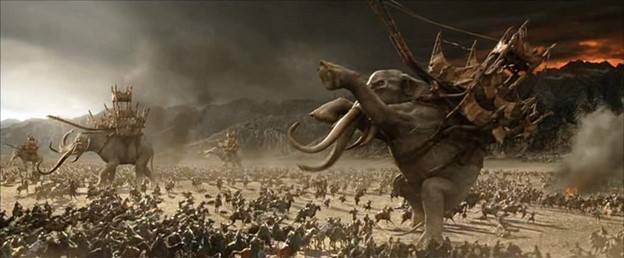


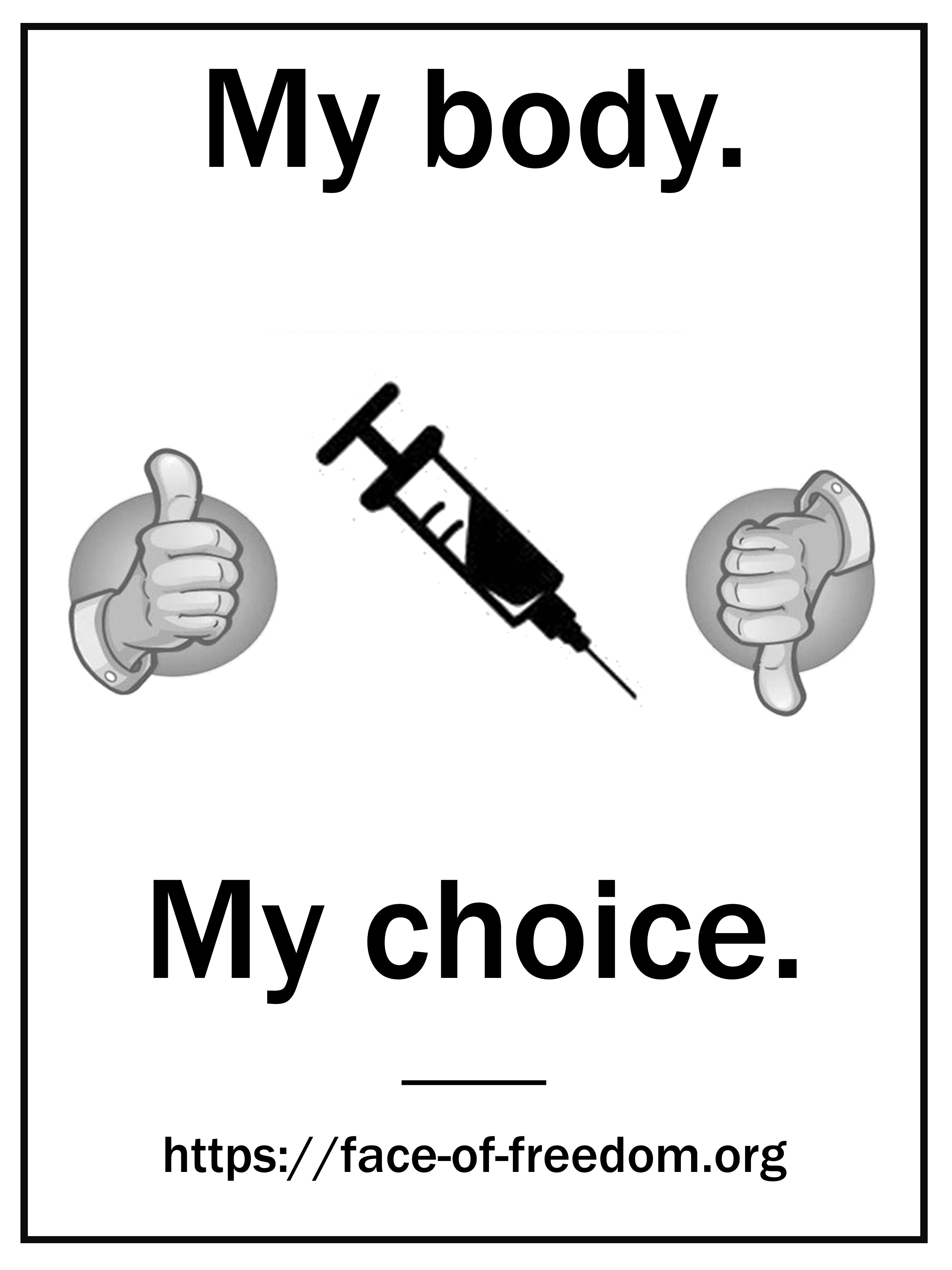


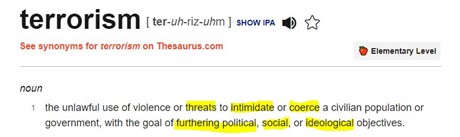


 Poor Roger's Almanac